What Is Egyptian Ratscrew?
Egyptian Ratscrew is a fast, interactive card game in which players build a central pile, respond to face-card challenges, and race to slap the pile whenever an agreed slap pattern appears. The basic flow has some of the same simple “play a card to the middle” rhythm that makes War easy to understand, but Egyptian Ratscrew adds much more player interaction because everyone must watch the pile closely and react at the right moment.
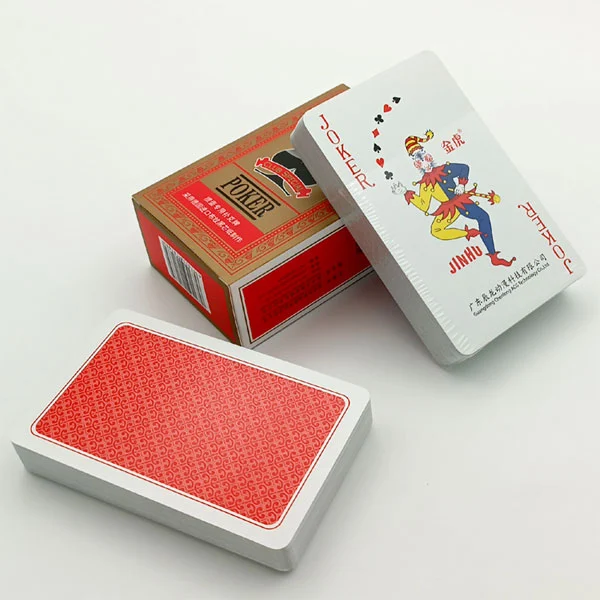
According to Bicycle Cards, the game can be played by 2, 3, 4, 5 or more players and is suitable for ages 8 and up. A standard 52-card deck is used. Jokers may also be included if the group agrees before play begins. The overall goal is straightforward: collect the entire deck. What makes the game distinctive is that players can gain the central pile in two different ways—by completing a face-card challenge or by being the first player to make a correct slap.
If you are exploring more easy-to-learn card games for groups, see our complete list of family card games for additional rule guides and game ideas.
Quick Rules Summary
| Item | Egyptian Ratscrew Rule |
|---|
| Players | 2, 3, 4, 5+ |
| Deck | One standard 52-card deck; Jokers may be added if agreed in advance |
| Age | 8+ |
| Main objective | Win and hold all cards in the deck |
| Core mechanisms | Face-card challenges plus legal slaps |
The quickest way to remember the game is this: players take turns revealing cards into one central pile. Number cards normally allow play to continue. A Jack, Queen, King or Ace starts a challenge for the next player. At any time, if the top cards form one of the agreed slap patterns, every player may try to slap the pile. The first correct slap wins the entire pile.
Setup: Dealing the Cards
Shuffle the deck and deal all cards out to the players as evenly as possible. Players keep their cards face down in personal piles and should not look through them. The exact pile sizes may differ by one card when the deck cannot be divided evenly among all players.
Play begins with the player to the dealer’s left. That player turns over the top card of their face-down pile and places it face up in the center. Play then moves around the group, with each player adding one card to the same central pile. Because the game depends on speed and visible card patterns, players should place cards so the newly revealed rank is clear to everyone.
When ordinary number cards are revealed, nothing special happens and play simply continues to the next player. The rhythm changes when a Jack, Queen, King or Ace appears, because that card begins the face-card challenge.
How the Face-Card Challenge Works
The face-card challenge is one of the two main ways to win the center pile. Whenever a Jack, Queen, King or Ace is played, the next player gets a limited number of chances to reveal another Jack, Queen, King or Ace.
| Challenge Card | Chances for the Next Player |
|---|
| Jack | 1 chance |
| Queen | 2 chances |
| King | 3 chances |
| Ace | 4 chances |
Suppose a player reveals a Queen. The next player may turn over up to two cards while trying to reveal a Jack, Queen, King or Ace. If both cards are ordinary number cards, the player who originally played the Queen takes the entire center pile and places those cards into their own pile. That player then begins the next sequence.
If the challenged player reveals a new face card or Ace within the allowed number of attempts, the challenge immediately transfers to the following player. For example, if a Queen is followed by a King on the challenged player’s first attempt, the Queen challenge ends and the King now gives the next player three chances to respond with another face card or Ace.
This chain can continue through several players. A pile may grow quickly, which is why a successful slap can be especially valuable. Players should therefore follow both the challenge count and the visible slap patterns at the same time.
All Slap Rules Explained
Bicycle Cards lists seven slap patterns for Egyptian Ratscrew. When one of these patterns appears, all eligible players may attempt to slap the central pile. The first player to make a correct slap collects the entire pile. Before beginning, the group should confirm that it is using these patterns as written, especially if Jokers are included.
| Slap Rule | What It Means | Example |
|---|
| Double | Two cards of the same rank appear consecutively. | 5, 5 |
| Sandwich | Two cards of the same rank have exactly one card between them. | 5, 7, 5 |
| Top Bottom | The newest top card matches the first card placed at the bottom of the pile. | If the pile began with an 8 and the current top card is also an 8, the pile may be slapped. |
| Tens | Two consecutive cards total 10. An Ace counts as 1 for this rule. | 3, 7; or A, K, 9 as the listed Bicycle example pattern where the Ace and 9 total 10 around the King. |
| Jokers | If Jokers are being used, any Joker makes the pile slappable. | A Joker is revealed on top of the pile. |
| Four in a Row | Four cards appear in consecutive ascending or descending rank order. | 5, 6, 7, 8 or Q, K, A, 2 |
| Marriage | A Queen and King appear consecutively in either order. | Q, K or K, Q |
Why Slap Timing Matters
A legal slap can interrupt what would otherwise be a normal turn sequence or an ongoing face-card challenge. This means players should never focus only on whose turn it is. Every new card can change the status of the pile. A card may continue a challenge, create a slap pattern, or do both in quick succession.
Players who have already run out of cards are not necessarily eliminated. Under the Bicycle rules, a player with no cards may still “slap in” by making a correct slap and winning the pile. As long as that player avoids a false slap, there is still a route back into the game.
False Slaps & Penalties
Speed creates mistakes, so Egyptian Ratscrew includes a penalty for slapping when no legal slap pattern is present. Bicycle states that a player who slaps incorrectly must add one or two cards to the bottom of the center pile. Because the source allows a one- or two-card penalty, the group should agree before the game whether its penalty will be one card or two.
This rule keeps random slapping from becoming a useful strategy. A player who reacts too early risks giving away cards and strengthening the central pile for whoever wins it next. It also matters for players who have no cards left: they may still return to the game with a correct slap, but an incorrect slap does not create a free second chance.
Winning the Game
The winner is the player who eventually controls all of the cards. A player can build toward that goal by collecting face-card challenge piles and by winning legal slaps. Because cards continually move between players and the center, the apparent leader can change many times before the game ends.
If a player loses their final card, keep watching the center instead of assuming that player is permanently out. The Bicycle rules specifically allow a player with no cards to continue attempting legal slaps. A successful slap gives that player the pile and returns them to active play. The game ends only when one player has gained possession of the entire deck.
Popular House Variations
The following ideas are house variations rather than additional Bicycle rules. Egyptian Ratscrew is often played by groups that agree on their own slap list or penalty format before the first deal. If you use a variation, state it clearly before play so every player is reacting to the same rules.
Reduced slap list: New players may agree to use only a few slap patterns at first, then add more patterns in later games.
Custom false-slap penalty: A group may choose whether the official one- or two-card penalty is fixed at one card or fixed at two cards for that session.
Joker choice: Because Jokers are optional, one group may include them while another may play only with the standard 52 cards.
House-only patterns: Some groups create additional slappable combinations. These are house rules and should not be confused with the seven Bicycle patterns listed above.
FAQ
How many people can play Egyptian Ratscrew?
Bicycle lists the game for 2, 3, 4, 5 or more players. The cards are dealt among the players, and everyone follows the same central pile.
How many chances do face cards give in Egyptian Ratscrew?
A Jack gives the next player 1 chance, a Queen gives 2 chances, a King gives 3 chances, and an Ace gives 4 chances to reveal another Jack, Queen, King or Ace.
Can you still slap after running out of cards?
Yes. A player who has no cards may still slap in if a valid slap pattern appears. A correct slap lets that player take the center pile and continue playing.
What happens if you slap the pile by mistake?
A false slap requires the player to add one or two cards to the bottom of the center pile. Agree on the exact one- or two-card penalty before starting so the rule is consistent.
For game publishers and creators developing their own card-game concepts, Guangdong Chenlong ACG Technology Co., Ltd also provides custom playing card printing; inquiries can be sent to info@chenlong-acg.com.