What Is Spit?
Spit is a fast two-player card game built around simultaneous play rather than traditional turns. Both players watch the center piles, move cards as soon as legal opportunities appear, refill their personal rows, and race to clear all of their cards before the other player does.
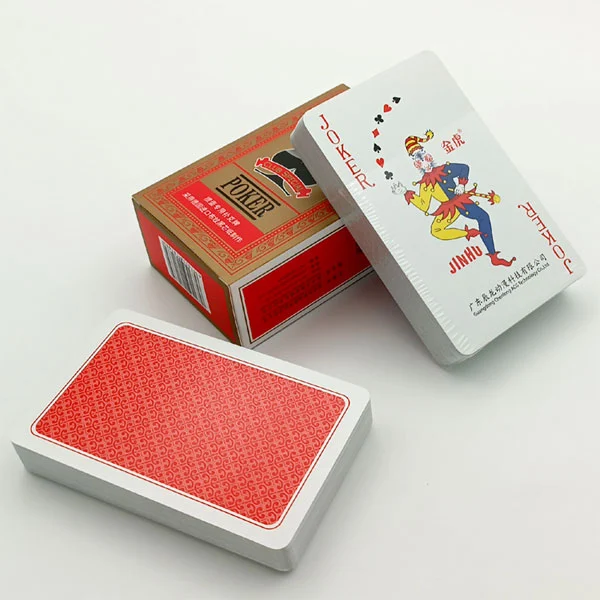
Bicycle Cards lists Spit for exactly 2 players, age 8 and up. Each player uses a standard deck of cards, so two decks are required in total. The game does not pause after every move to pass a turn. Instead, both players act at the same time, which makes attention, legal-card recognition and quick hand movement central to the experience.
If you are looking for other easy card-game ideas for small groups or family play, our complete list of family card games collects more games and rule guides in one place.
Quick Rules Summary
| Item | Spit Rule |
|---|
| Players | 2 |
| Decks | Two standard decks, one deck for each player |
| Age | 8+ |
| Turn structure | No turns; both players act simultaneously |
| Goal | Be the first player to get rid of all cards in the hand/stock and layout |
The basic idea is simple. Each player has four face-up cards available in a personal row and holds the rest of their deck as a stock. The center begins with two active play piles. A face-up row card can be moved to a center pile when it is exactly one rank higher or one rank lower than that pile’s top card. Suits do not matter, and an Ace may be treated as high or low. Empty spaces in the personal row are refilled immediately, but the row may never contain more than four cards.
Setup: The Layout
Give each player one complete standard deck. Each player places four cards face up in a horizontal row in front of themselves. The remaining cards stay together as that player’s stock, held so new cards can be drawn from the top as needed.
The central area needs space for two play piles. These are shared targets: either player may play on either center pile whenever they have a legal card available. The two players do not alternate between the center piles and do not own one pile each.
Before active play starts, both players should be able to see their four face-up row cards and the center area clearly. The rules depend on recognizing adjacent ranks quickly, so cards should be placed in a way that makes the current top card on each central pile visible.
How Play Works
To begin, one player calls “spit.” Both players then turn one card from their stocks into the center, creating the two active play piles. From that moment, both players play at the same time.
A face-up card from a player’s four-card row may be placed on either central pile if it is exactly one rank above or one rank below the current top card. Suit and color are irrelevant. If the top card is a 7, for example, a 6 or an 8 may be played on it. The card sequence recognized by Bicycle allows the Ace to be high or low, so it can connect at the ends of the rank sequence according to that rule.
Players should continuously scan both center piles and all four cards in their own row. After one card is moved, the top rank of a center pile changes immediately, which may create another legal move. Because there are no alternating turns, a player does not need to wait for the opponent to act before making another legal play.
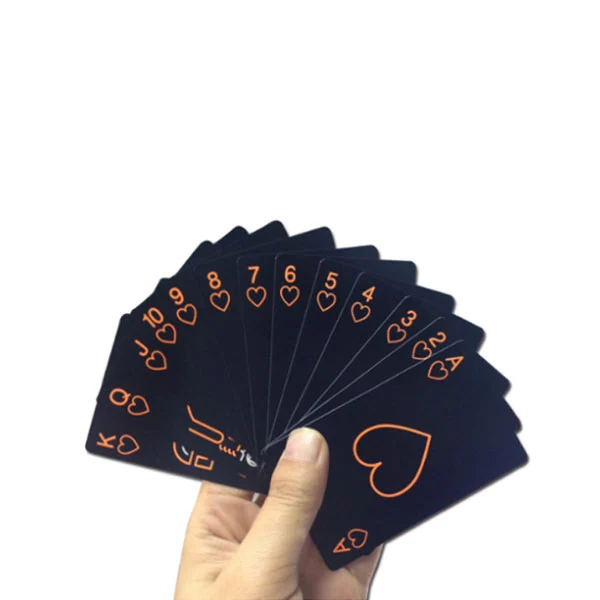
The official rank order given by Bicycle is A, K, Q, J, 10 down through 2, with the Ace able to function high or low. The key test is always whether the card being played is one rank above or one rank below the exposed center card.
The One-Hand Rule & Races
Spit is fast, but speed does not remove the movement restrictions. Bicycle specifies that players use only one hand and move only one card at a time. A player cannot use both hands to cover both center piles, and cannot pick up several row cards as a group in order to move them together.
The “one card at a time” rule keeps every play individually visible. Each moved card changes the current state of the game, so the next legal move must be judged from the newly exposed center-card ranks.
Sometimes both players will notice the same legal destination at almost the same moment. If both race to place a card on the same center pile, the first card to reach that pile is the one that counts. The second player must reassess the pile after the first card changes its top rank. That card may still have a legal destination elsewhere, or it may need to stay in the player’s row.
Refilling and Getting Stuck
Whenever a player creates an empty space in their four-card face-up row, that player immediately fills the space from the top of their stock. The row cannot contain more than four cards. This means the player repeatedly cycles new cards into view as playable cards leave the row.
For example, if a player has four row cards and moves one of them onto a center pile, the row temporarily has three cards. The player draws the top stock card into the empty position, restoring the row to four face-up cards. If several legal moves happen in quick succession, each empty spot should be refilled as play continues, as long as cards remain in the stock.
Eventually, both players may reach a position in which neither can legally play any of the visible row cards on either center pile. When all players are stuck, Bicycle instructs the players to restart the center by calling “ready, spit” and each turning a new card to form fresh starting cards for play. The new center cards may create new one-rank-up or one-rank-down options.
Getting stuck does not by itself end the game. It simply means the current two center ranks offer no legal move. A new spit refreshes those starting ranks so simultaneous play can continue.
Winning and Scoring
The primary winning condition is to get rid of every card in both parts of your personal supply: the stock and the face-up row. The first player to clear all of those cards wins.
Because row spaces are normally refilled from the stock, the end of a game changes naturally when a stock runs out. A player who has no cards left in the stock must then clear the remaining face-up row cards. Once that player has no stock cards and no row cards, that player has completed the objective.
Bicycle also gives a rule for a blocked ending in which both players have exhausted their stock piles but become stuck. In that situation, the player with fewer cards remaining wins. This prevents a game from continuing indefinitely when there are no stock cards available to create another normal sequence of play.
Spit vs. Speed
The names “Spit” and “Speed” are often associated with fast, simultaneous card games, but exact rules can vary by source and by group. This section is a non-official comparison rather than an additional Bicycle rule set. For this guide, “Spit” means the Bicycle version described above: two players, one standard deck per player, four face-up cards in each player’s row, two shared center piles, one-hand play and rank-adjacent moves.
If your group already uses the name “Speed” for a similar game, compare the setup and movement rules before starting rather than assuming every detail is identical. The safest approach is to choose one written rule set for the session and apply it consistently.
FAQ
How many people can play Spit?
The Bicycle rules used for this guide specify 2 players.
How many decks do you need for Spit?
You need two standard decks because each player uses one complete deck.
Can an Ace be played on a King or a 2?
Bicycle states that the Ace can be high or low. The legal-play test remains the same: a card placed on a center pile must be one rank above or one rank below the current top card.
What happens when neither player can move?
When both players are stuck, the players call “ready, spit” and each turns a new card to refresh the center piles. If both stocks have already been exhausted and the game is still blocked, the player with fewer remaining cards wins.
For designers creating their own two-player card-game concepts, Guangdong Chenlong ACG Technology Co., Ltd provides custom playing card printing; project inquiries can be sent to info@chenlong-acg.com.