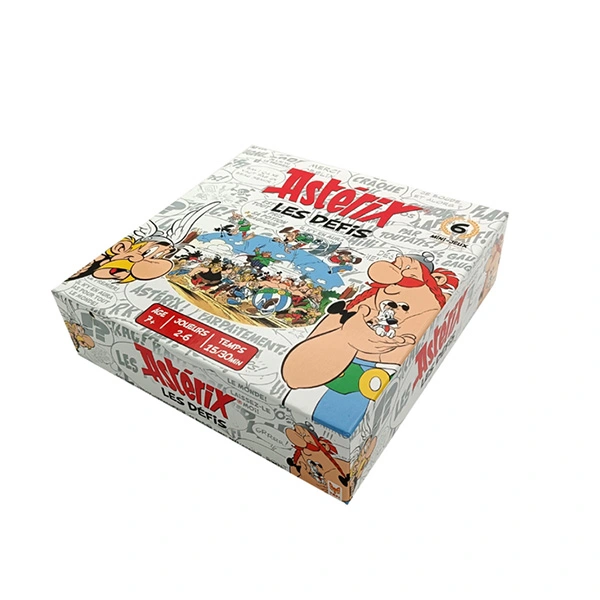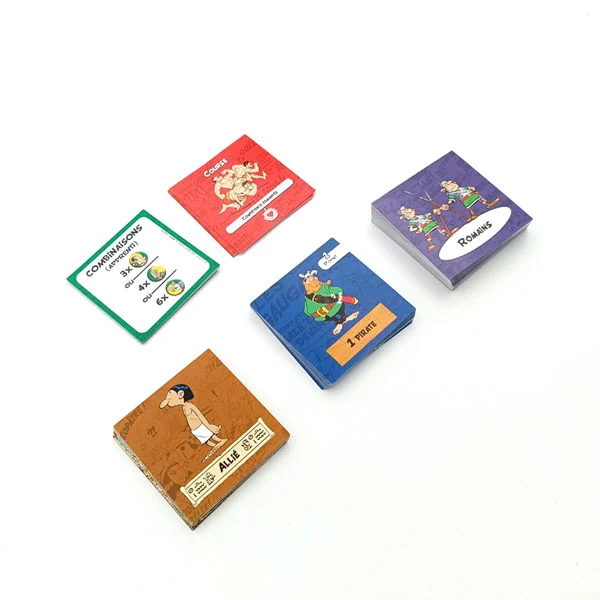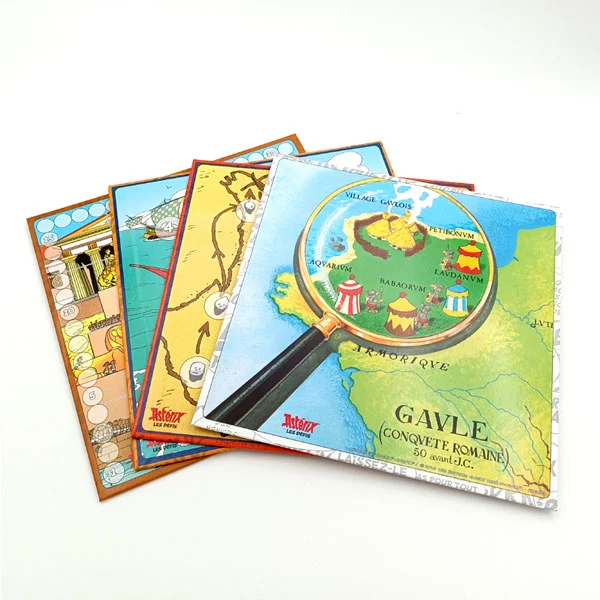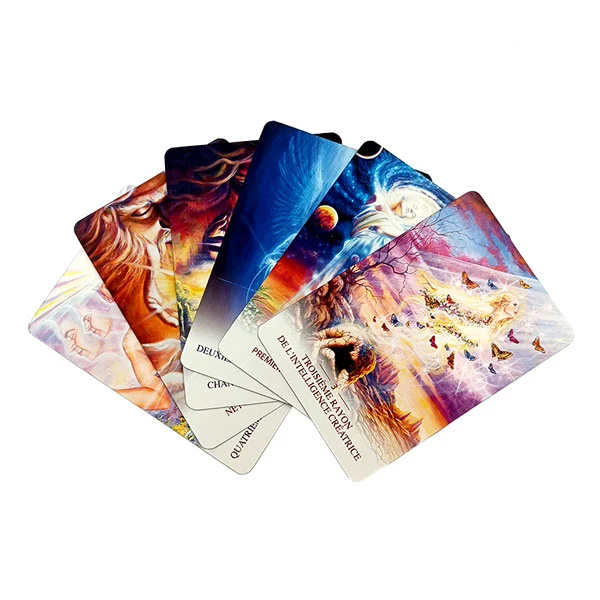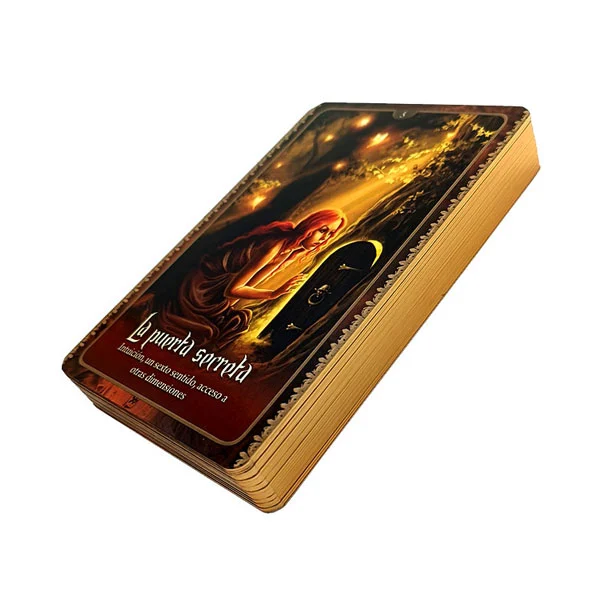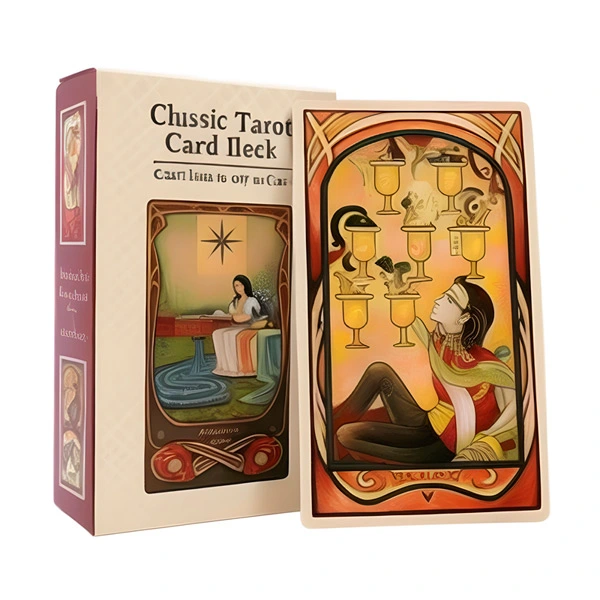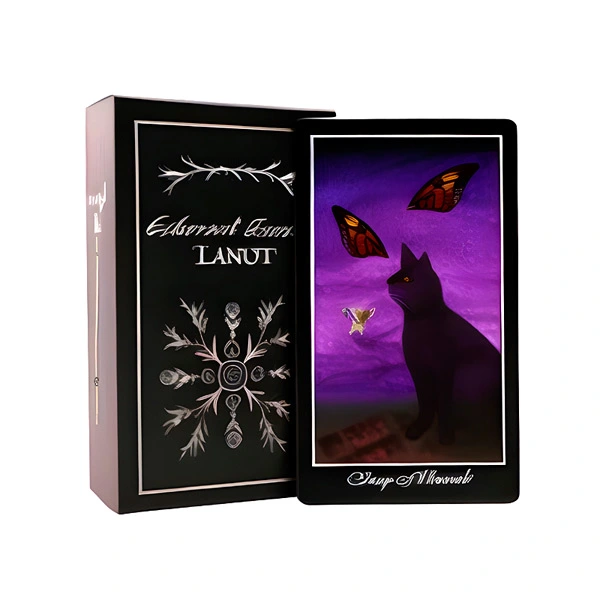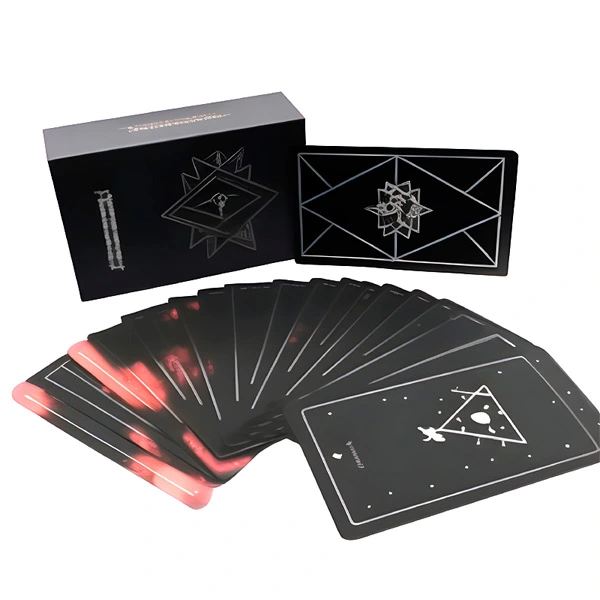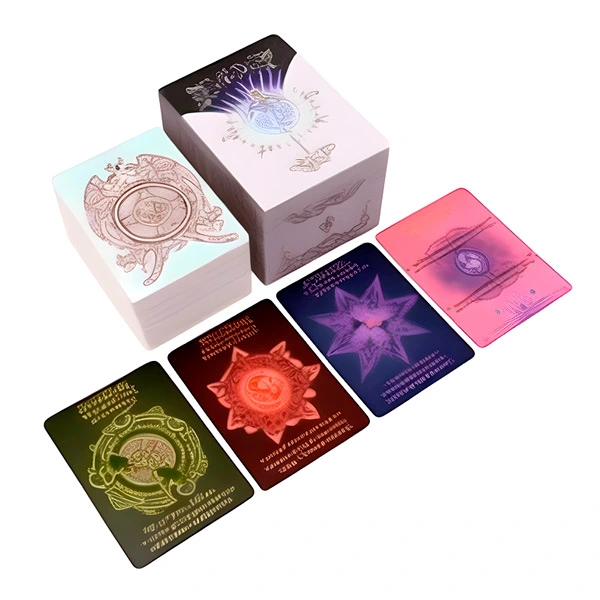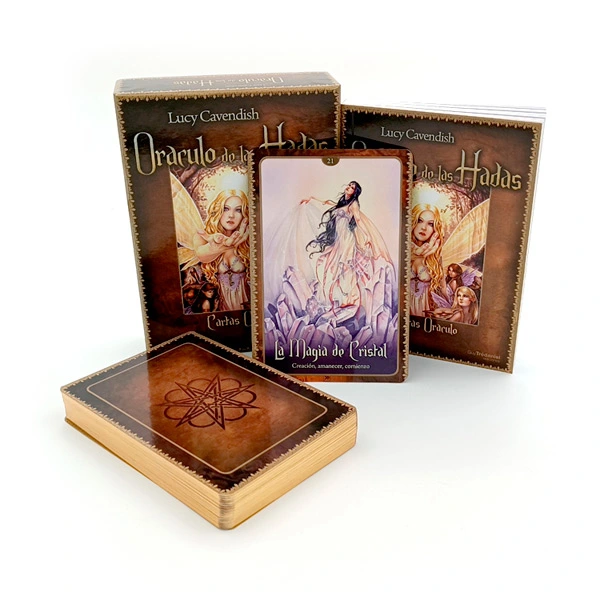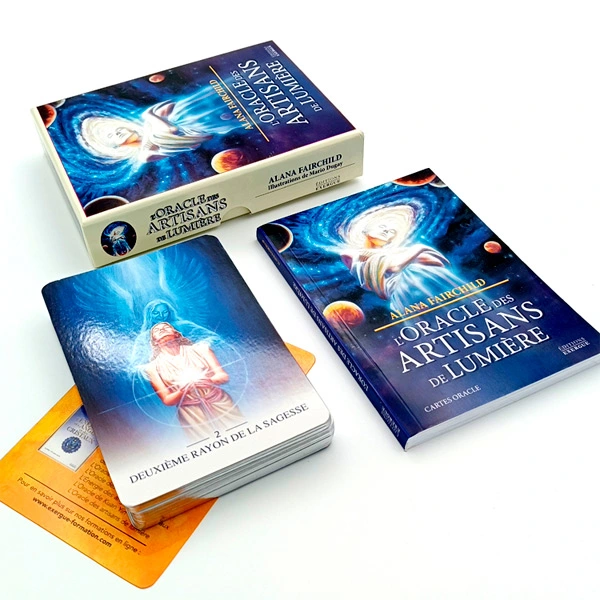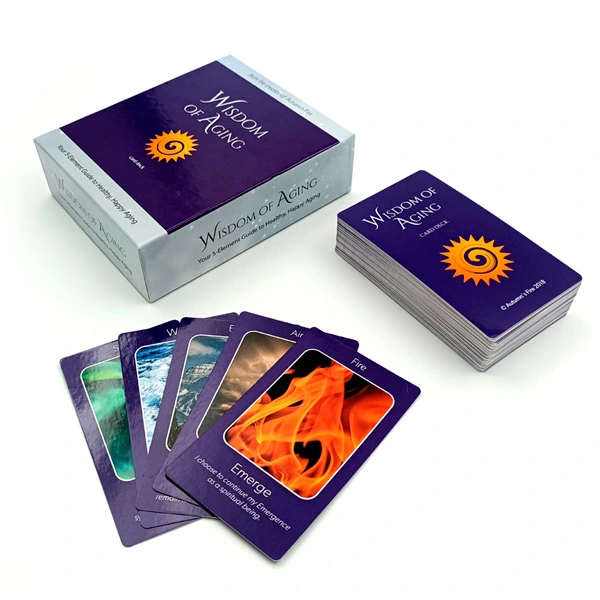
Selecting the correct card dimensions is one of the most important decisions when manufacturing custom board game cards. Card size directly affects gameplay, player comfort, artwork design, packaging dimensions, production costs, and compatibility with sleeves and accessories.
Whether you are developing a trading card game, a Euro-style strategy game, a party game, or a collectible card game, understanding industry-standard card sizes can help you avoid costly redesigns and improve the overall player experience.
Most successful game publishers choose standardized card sizes because they simplify manufacturing, reduce costs, and increase compatibility with existing accessories.
Why Card Size Matters in Board Game Design
Card dimensions influence much more than appearance. They affect:
Ease of shuffling
Player hand management
Artwork layout
Text readability
Production efficiency
Sleeve compatibility
Packaging design
Shipping costs
Choosing a non-standard size may make your game stand out, but it can also increase manufacturing complexity and limit accessory compatibility.
Most Common Board Game Card Sizes
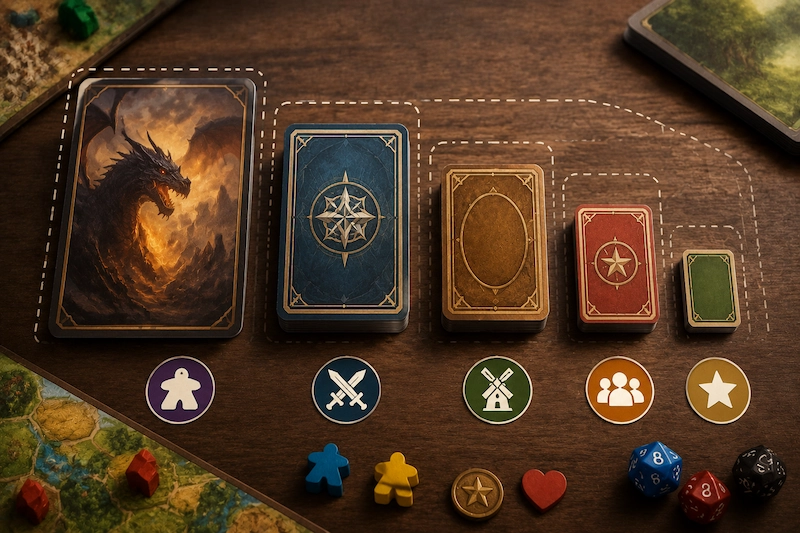
| Card Type | Dimensions (mm) | Common Uses |
|---|
| Poker Size | 63 × 88 | TCG, CCG, party games |
| Bridge Size | 57 × 88 | Large-hand card games |
| Mini Euro | 45 × 68 | Resource cards, reference decks |
| Standard Euro | 59 × 92 | Euro strategy games |
| Tarot Size | 70 × 120 | Tarot and oversized cards |
| Mini Cards | 44 × 68 | Travel and compact games |
Each format serves specific gameplay and production requirements.
Poker Size Cards: The Industry Standard for TCG and CCG
Poker Size cards (63 × 88 mm) are the most widely used format in the gaming industry.
Many successful titles use this size because it provides an excellent balance between artwork space and handling comfort.
Advantages
Excellent sleeve availability
Familiar to players worldwide
Comfortable handling
Suitable for detailed artwork
Cost-effective production
Common Applications
Bridge Size Cards: Better for Large Hands
Bridge cards maintain the same height as Poker cards but are slightly narrower.
| Feature | Poker | Bridge |
|---|
| Width | 63 mm | 57 mm |
| Hand Comfort | Good | Excellent |
| Artwork Area | Larger | Smaller |
For games where players frequently hold many cards simultaneously, Bridge size can improve usability.
Standard Euro Cards: Popular in Modern Strategy Games
Euro-style board games often require large amounts of information on cards, including icons, resources, abilities, and scoring conditions.
The Standard Euro format (59 × 92 mm) offers additional vertical space for text and symbols while maintaining reasonable handling characteristics.
Best Applications
Mini Euro Cards: Maximizing Table Space
Many strategy games include hundreds of cards that function primarily as resources, objectives, or references.
Mini Euro cards reduce table clutter while lowering production costs.
| Benefit | Impact |
|---|
| Smaller Components | More efficient gameplay area |
| Lower Material Usage | Reduced production costs |
| Compact Packaging | Lower shipping expenses |
Common Uses
Resource decks
Objective cards
Event cards
Reference cards
Expansion content
Tarot Size Cards for Premium Experiences
Oversized cards are increasingly popular in premium board game editions.
Tarot-sized cards allow designers to showcase large illustrations, thematic storytelling, and detailed visual elements.
Advantages
Disadvantages
Higher manufacturing costs
Larger packaging requirements
Increased shipping weight
Reduced portability
Best Card Sizes for Different Game Types
| Game Type | Recommended Size |
|---|
| TCG | Poker Size |
| CCG | Poker Size |
| Deck Building Games | Poker Size |
| Euro Strategy Games | Standard Euro |
| Party Games | Poker Size |
| Resource Cards | Mini Euro |
| Premium Collector Editions | Tarot Size |
How Card Size Influences Manufacturing Costs
Publishers often focus on card quantity while overlooking the impact of dimensions.
Larger cards generally increase:
For large production runs, optimizing card dimensions can significantly improve profit margins.
Should You Use a Custom Card Size?
Some publishers choose unique dimensions to differentiate their products.
While custom sizing can create a distinctive appearance, it may also introduce challenges:
Higher tooling costs
Limited sleeve availability
Longer production timelines
More complex packaging design
Higher minimum order quantities
For most projects, standard industry sizes remain the safest and most economical option.
Questions Game Publishers Frequently Ask
What is the most common size for custom board game cards?
Poker Size (63 × 88 mm) remains the most widely used format across the board game industry.
Which card size is best for strategy games?
Standard Euro cards are often preferred because they provide additional space for information-rich designs.
Do larger cards increase manufacturing costs?
Yes. Larger dimensions generally require more materials, larger packaging, and higher shipping expenses.
Can different card sizes be combined in one game?
Absolutely. Many modern board games use multiple card sizes for different gameplay functions.
Are standard sizes better than custom sizes?
In most cases, yes. Standard sizes simplify production, improve sleeve compatibility, and reduce overall costs.
Final Recommendation
When designing custom board game cards, selecting the right dimensions should be based on gameplay requirements, artwork complexity, player comfort, manufacturing efficiency, and distribution strategy. Poker Size remains the most versatile choice for TCGs, CCGs, and party games, while Standard Euro cards excel in information-heavy strategy games.
Before finalizing your card specifications, consult your manufacturing partner regarding printing layouts, packaging options, sleeve compatibility, and production economics. Choosing the right card size early in development can help reduce costs, improve gameplay, and increase the commercial success of your board game.