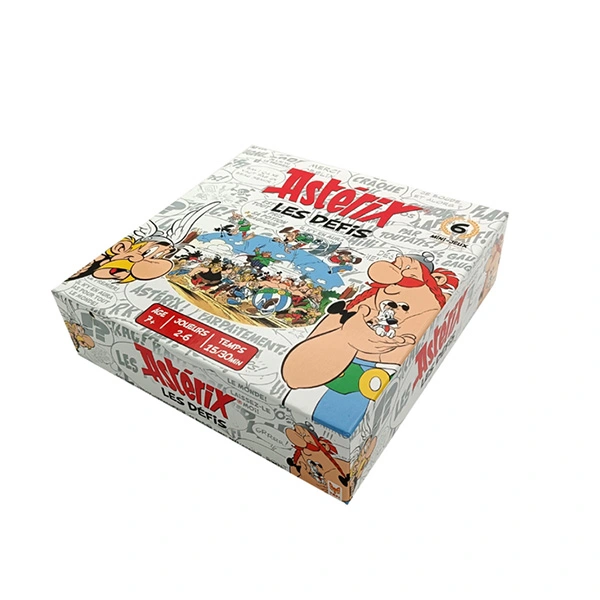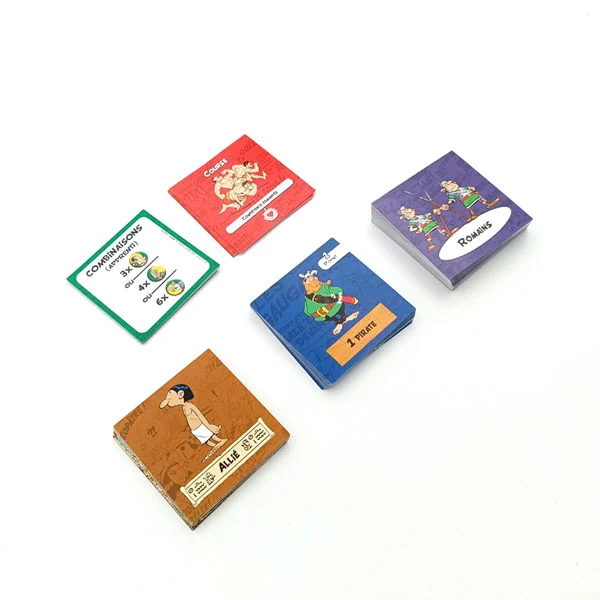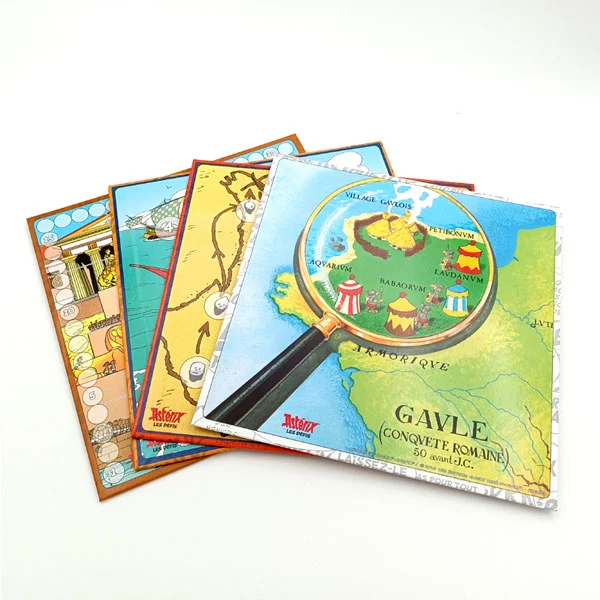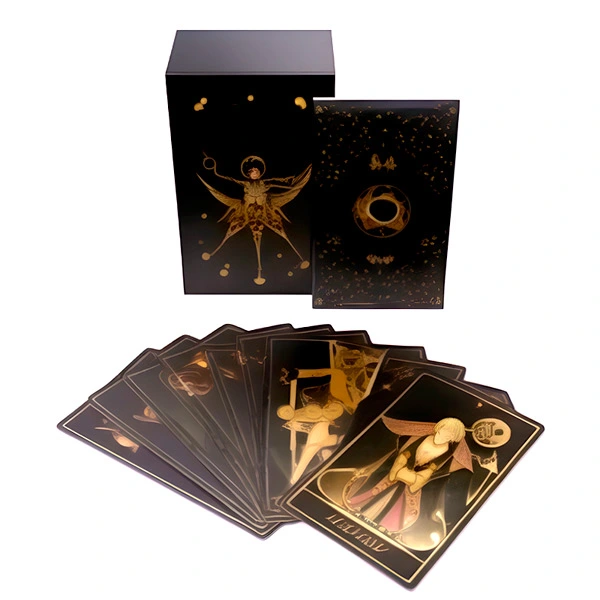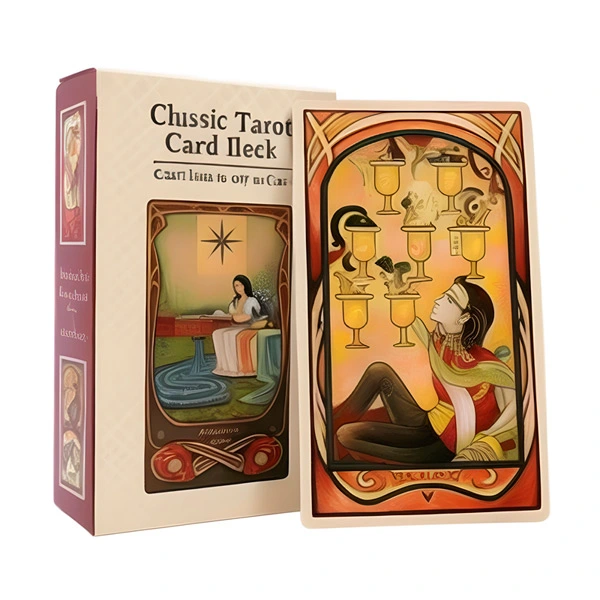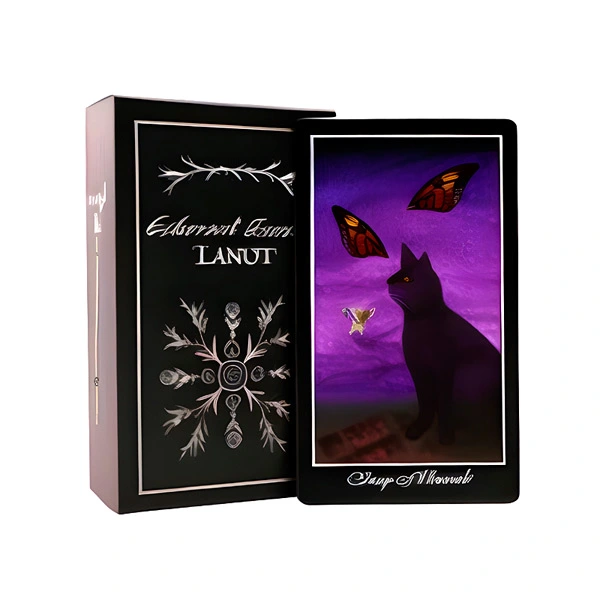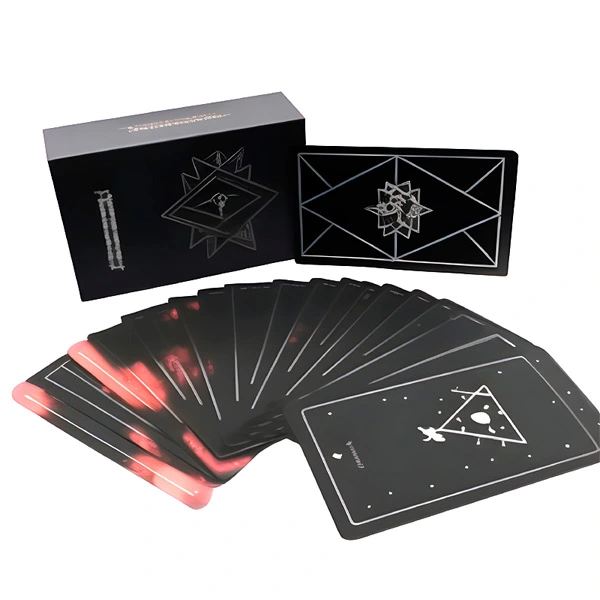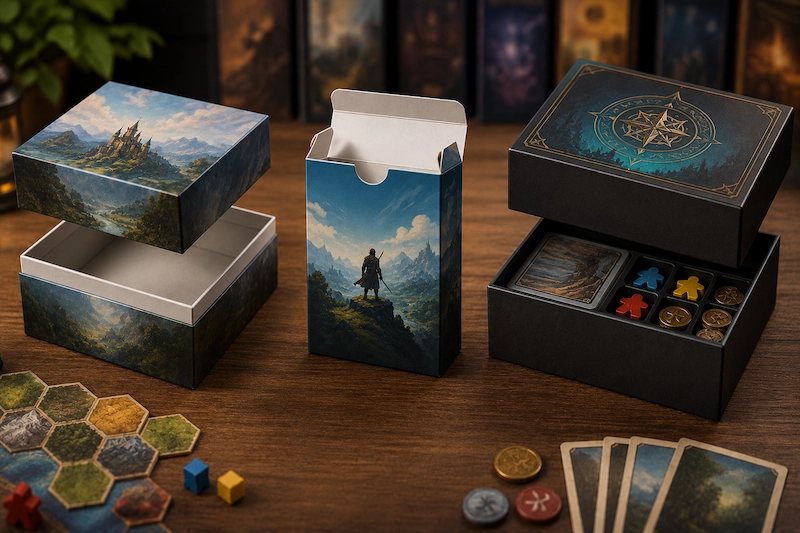
Choosing the right packaging is just as important as designing the game itself. For publishers investing in custom board game boxes, packaging affects first impressions, production cost, shelf appeal, shipping efficiency, and long-term durability.
Among the most common packaging options in the board game industry are Telescope Boxes, Tuck Boxes, and Rigid Boxes. Each style serves different product categories and budgets. Selecting the wrong box can increase logistics costs, reduce perceived value, or negatively impact the customer experience.
The best choice depends on your game's components, target retail price, distribution channels, and brand positioning.
Understanding the Three Main Board Game Box Styles
Before comparing advantages and disadvantages, let's define each packaging format.
| Box Type | Structure | Typical Applications |
|---|
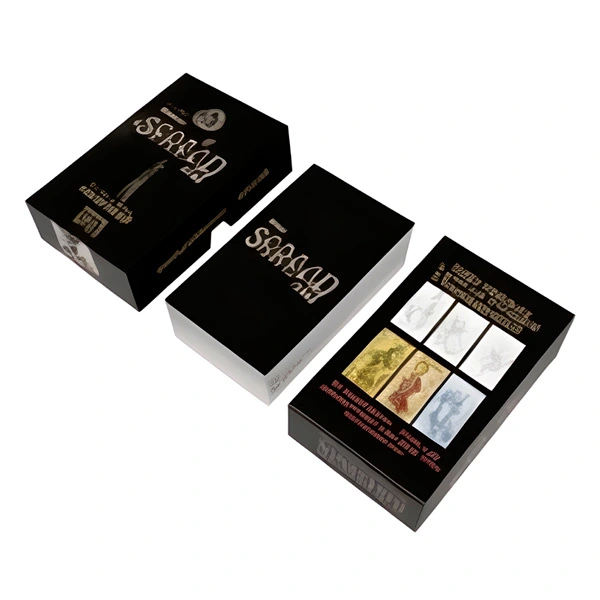
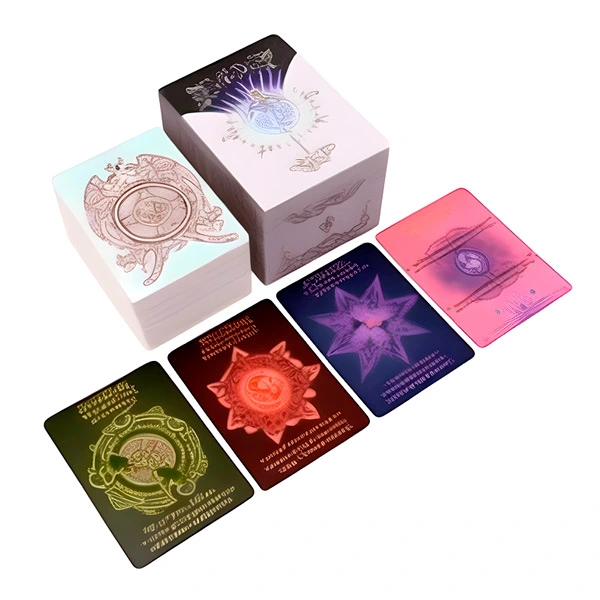
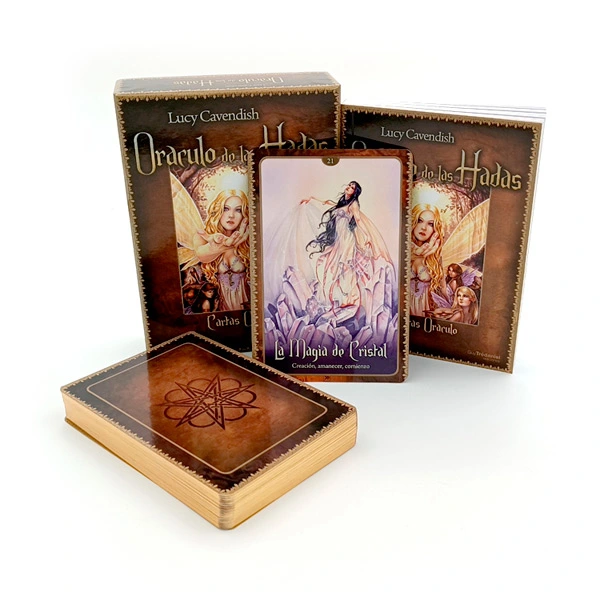
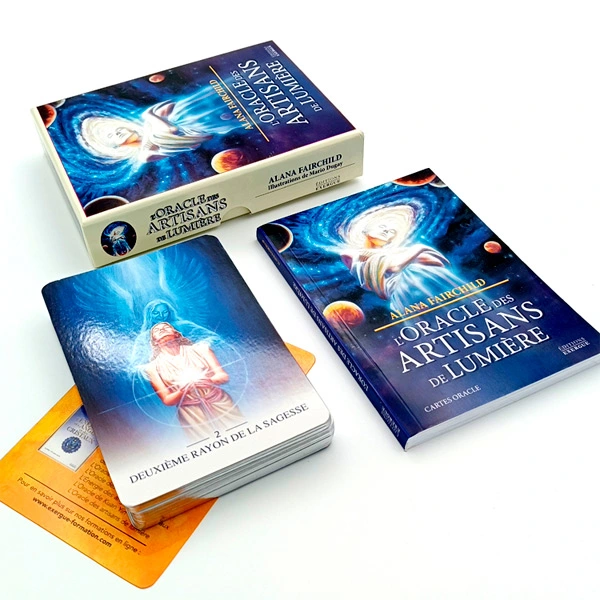
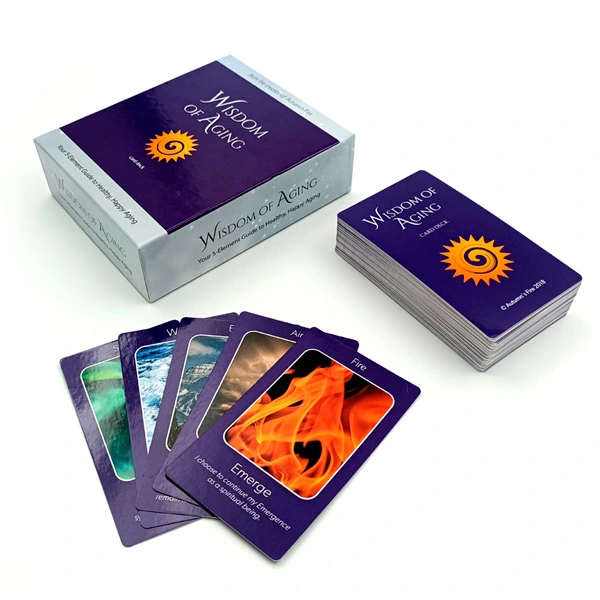
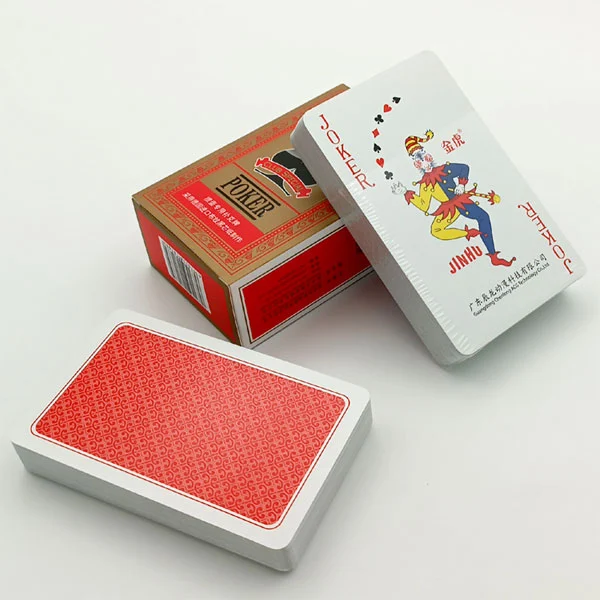
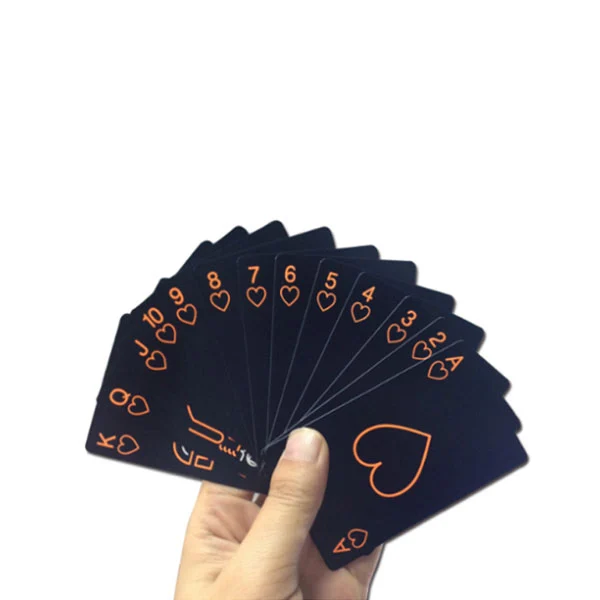
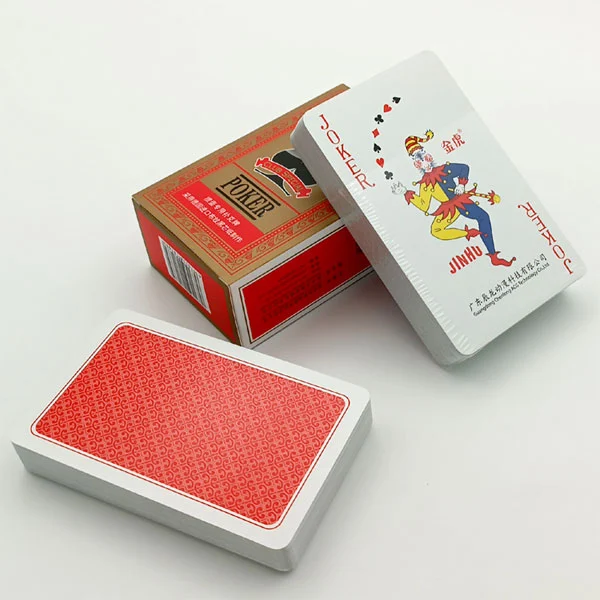
| Tuck Box | Foldable paperboard box with tuck flap | Card games, poker decks, tarot cards |
| Telescope Box | Separate lid and bottom tray | Board games, family games, strategy games |
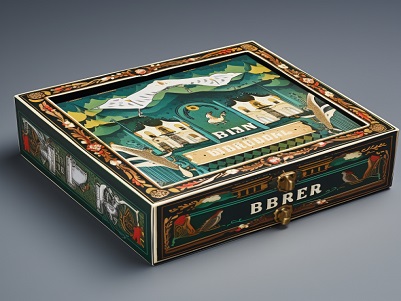
| Rigid Box | Hardboard construction with premium finish | Luxury games, collector editions, gift products |
Each packaging solution offers different benefits regarding protection, presentation, and cost.
What Is a Tuck Box?
The Tuck Box is one of the most widely used packaging formats in the gaming industry.
Made from folding paperboard, the box includes a top flap that tucks into the front panel for closure.
Advantages of Tuck Boxes
Lowest manufacturing cost
Lightweight for shipping
Quick production turnaround
Easy to assemble
Excellent for card-based products
Disadvantages of Tuck Boxes
Best Applications
Playing cards
Trading card games
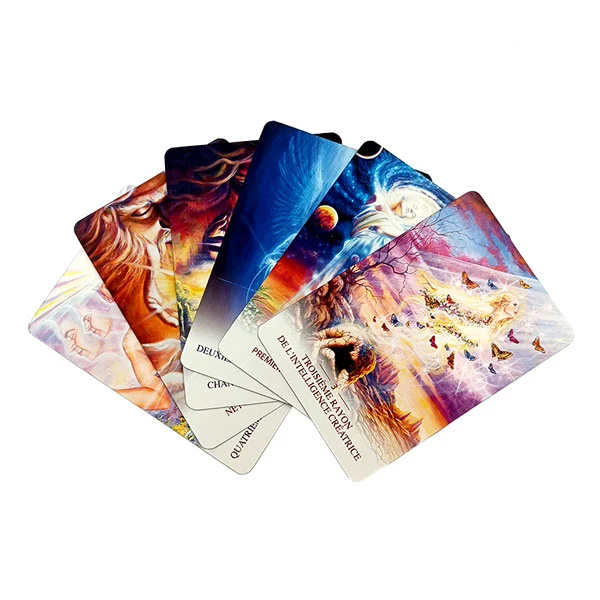
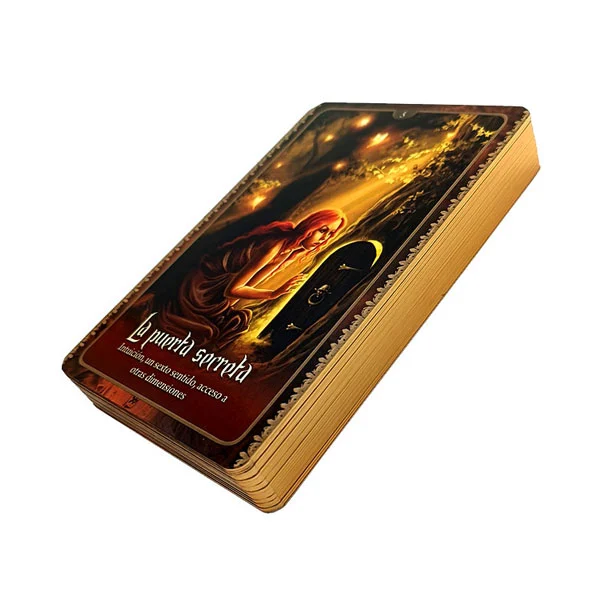
Tarot decks
Oracle decks
Small party games
For startups launching their first game, tuck boxes often provide the most economical entry point.
What Is a Telescope Box?
The Telescope Box consists of a separate top lid and bottom tray. It is often referred to as a two-piece box and remains the industry standard for most commercial board games.
Many bestselling strategy and family games use telescope-style packaging because it balances durability, presentation, and cost.
Advantages of Telescope Boxes
Strong structural integrity
Professional retail appearance
Suitable for inserts and organizers
Excellent stacking performance
Cost-effective for medium and large games
Disadvantages of Telescope Boxes
Best Applications
Euro games
Family games
Educational games
Strategy board games
Crowdfunding projects
For most board game publishers, telescope boxes provide the best balance between product protection and manufacturing cost.
What Is a Rigid Box?
Rigid Boxes are manufactured from thick greyboard or chipboard and cannot be folded flat. They are commonly associated with luxury products and premium branding.
Compared with standard packaging, rigid boxes create a significantly stronger unboxing experience.
Advantages of Rigid Boxes
Disadvantages of Rigid Boxes
Highest manufacturing cost
Higher shipping expenses
Larger warehouse requirements
Longer production timelines
Best Applications
Publishers seeking premium positioning often choose rigid boxes to justify higher retail prices.
Comparison of Manufacturing Costs
Cost is often the deciding factor when selecting among different custom board game boxes.
| Box Type | Relative Cost | Shipping Cost | Assembly Complexity |
|---|
| Tuck Box | Low | Low | Low |
| Telescope Box | Medium | Medium | Medium |
| Rigid Box | High | High | High |
For large production runs, packaging decisions can significantly influence profit margins.
How Packaging Affects Retail Shelf Appeal
Packaging often serves as the first interaction between customers and your product.
| Feature | Tuck Box | Telescope Box | Rigid Box |
|---|
| Visual Impact | Moderate | High | Very High |
| Perceived Value | Basic | Professional | Premium |
| Gift Suitability | Limited | Good | Excellent |
Premium packaging can increase perceived value even when the game components remain unchanged.
Which Box Style Works Best for Crowdfunding Projects?
Crowdfunding backers often expect a stronger unboxing experience than traditional retail buyers.
Many successful Kickstarter projects combine multiple packaging styles to optimize costs while maintaining premium presentation.
How Shipping and Logistics Influence Packaging Decisions
International shipping costs continue to increase, making packaging efficiency more important than ever.
Publishers should evaluate:
A rigid box may improve presentation, but the additional logistics expense can substantially affect overall profitability.
Questions Buyers Frequently Ask
Which box style is most commonly used for board games?
Telescope Boxes are currently the industry standard for most commercial board games.
Are rigid boxes worth the additional cost?
For premium products, collector editions, and crowdfunding campaigns, rigid boxes often increase perceived value and customer satisfaction.
Can tuck boxes be used for board games?
They are generally best suited for card games or small component games rather than large board games.
Which box style offers the best protection?
Rigid Boxes provide the highest level of protection, followed by Telescope Boxes.
Final Recommendation
When selecting custom board game boxes, the right choice depends on your product positioning and budget. Tuck Boxes are ideal for cost-sensitive card games, Telescope Boxes remain the most versatile solution for mainstream board games, and Rigid Boxes deliver premium presentation for deluxe and collector editions.
Before moving into production, consider not only manufacturing costs but also shipping expenses, retail expectations, storage requirements, and long-term brand perception. The most successful packaging solution is the one that aligns with both your customer experience goals and your commercial objectives.