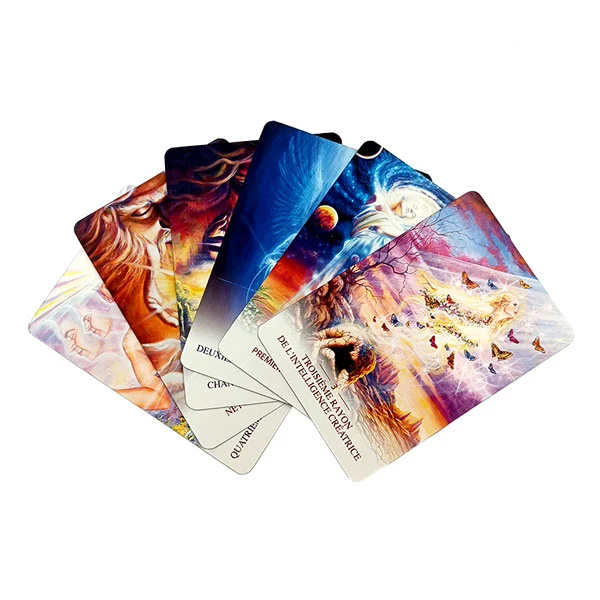
If you are learning tarot, designing a new deck, or simply need a fast reference, it helps to see all 78 cards in one place. This tarot cards list organizes the complete deck into the 22 Major Arcana and 56 Minor Arcana, with concise upright keywords for every card.
The keywords below are not fixed definitions. Tarot interpretation varies by deck, reading tradition, surrounding cards, question, and reader. Terms such as “new beginnings” for The Fool or “intuition” for The High Priestess should therefore be treated as commonly used interpretive summaries rather than rules that every reading must follow.
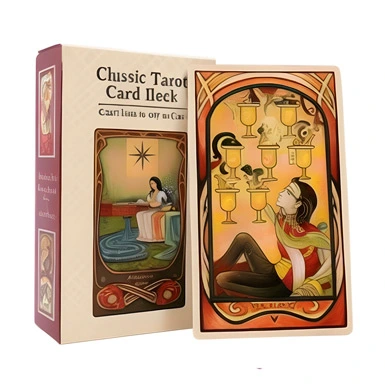
The V&A notes that tarot was originally used as a card game before becoming associated with fortune-telling and other forms of interpretation. Today, its recognizable structure also provides a framework for artists and publishers creating new visual interpretations of the deck.
1. The Structure of a Tarot Deck
A traditional tarot deck contains 78 cards. According to Encyclopaedia Britannica, the deck is divided into two principal groups: 22 Major Arcana cards and 56 Minor Arcana cards. The Minor Arcana are divided into four suits containing 14 cards each.
| Section | Number of Cards | Basic Structure |
|---|
| Major Arcana | 22 | Individually named cards traditionally numbered from The Fool through The World |
| Minor Arcana | 56 | Four suits with 14 cards in each suit |
| Wands | 14 | Ace through Ten, plus Page, Knight, Queen and King |
| Cups | 14 | Ace through Ten, plus Page, Knight, Queen and King |
| Swords | 14 | Ace through Ten, plus Page, Knight, Queen and King |
| Pentacles | 14 | Ace through Ten, plus Page, Knight, Queen and King |
You may encounter differences in card names, suit names, numbering, or imagery between tarot traditions and individual deck designs. The sequence below uses a commonly encountered modern naming system for quick reference. Variations between traditions should not automatically be treated as errors.
If you are approaching the list as a deck designer rather than a reader, the important structural point is simple: a conventional full tarot project normally needs artwork for 78 distinct cards, unless you intentionally create a modified or expanded system.
2. The 22 Major Arcana
The Major Arcana are individually named cards rather than members of the four Minor Arcana suits. In readings, they are commonly associated with larger themes, turning points, archetypal situations, or significant stages of experience. This is an interpretive convention rather than an objective definition.
Use the following table as a fast tarot card meanings list. The upright keywords are deliberately brief so you can scan the complete sequence without turning the page into 22 separate card essays.
| Number | Major Arcana Card | Common Upright Keywords |
|---|
| 0 | The Fool | New beginnings, openness, spontaneity, leap of faith |
| I | The Magician | Initiative, skill, manifestation, resourcefulness |
| II | The High Priestess | Intuition, inner knowledge, mystery, reflection |
| III | The Empress | Abundance, creativity, nurturing, growth |
| IV | The Emperor | Structure, authority, stability, leadership |
| V | The Hierophant | Tradition, teaching, guidance, established values |
| VI | The Lovers | Connection, choice, alignment, relationships |
| VII | The Chariot | Direction, determination, control, progress |
| VIII | Strength | Courage, patience, inner strength, compassion |
| IX | The Hermit | Introspection, solitude, wisdom, inner guidance |
| X | Wheel of Fortune | Change, cycles, turning point, opportunity |
| XI | Justice | Fairness, truth, accountability, balance |
| XII | The Hanged Man | Pause, surrender, new perspective, letting go |
| XIII | Death | Ending, transformation, transition, renewal |
| XIV | Temperance | Moderation, harmony, integration, patience |
| XV | The Devil | Attachment, temptation, restriction, material focus |
| XVI | The Tower | Disruption, revelation, sudden change, breakdown |
| XVII | The Star | Hope, inspiration, renewal, faith |
| XVIII | The Moon | Uncertainty, intuition, illusion, subconscious |
| XIX | The Sun | Joy, vitality, clarity, success |
| XX | Judgement | Reflection, awakening, evaluation, renewal |
| XXI | The World | Completion, integration, achievement, wholeness |
Beginners do not need to memorize every keyword at once. One practical approach is to first recognize the basic progression of the Major Arcana and then build a more nuanced understanding through repeated readings and comparison with the imagery in the specific deck being used.
3. The 56 Minor Arcana
The Minor Arcana contain four suits of 14 cards each. Each suit runs from Ace to Ten and then continues through four court cards: Page, Knight, Queen and King.
The following tables use Wands, Cups, Swords and Pentacles. Some decks may use different names for the suits, particularly Pentacles, which may appear under another traditional suit name.
Wands: 14 Cards
Wands are commonly interpreted through themes such as action, creativity, ambition, initiative and personal drive. In many modern correspondence systems, Wands are associated with the element of Fire; this is an interpretive convention rather than a requirement shared by every tarot tradition.
| Card | Common Upright Keywords |
|---|
| Ace of Wands | Inspiration, potential, new energy, initiative |
| Two of Wands | Planning, possibilities, direction, future choices |
| Three of Wands | Expansion, progress, foresight, opportunity |
| Four of Wands | Celebration, stability, community, milestone |
| Five of Wands | Competition, tension, disagreement, challenge |
| Six of Wands | Recognition, confidence, achievement, victory |
| Seven of Wands | Defense, perseverance, conviction, challenge |
| Eight of Wands | Movement, momentum, communication, rapid change |
| Nine of Wands | Resilience, persistence, boundaries, readiness |
| Ten of Wands | Burden, responsibility, effort, overload |
| Page of Wands | Curiosity, exploration, enthusiasm, new ideas |
| Knight of Wands | Action, passion, adventure, impulsiveness |
| Queen of Wands | Confidence, warmth, independence, determination |
| King of Wands | Vision, leadership, enterprise, bold direction |
Cups: 14 Cards
Cups are commonly connected with emotions, relationships, intuition, empathy and inner experience. Many modern tarot-reading systems associate Cups with Water. This should be treated as a mnemonic tradition rather than an absolute definition.
| Card | Common Upright Keywords |
|---|
| Ace of Cups | Emotional beginning, love, openness, compassion |
| Two of Cups | Partnership, connection, attraction, mutuality |
| Three of Cups | Friendship, celebration, community, support |
| Four of Cups | Contemplation, disengagement, reevaluation, apathy |
| Five of Cups | Loss, disappointment, grief, perspective |
| Six of Cups | Nostalgia, generosity, memories, familiarity |
| Seven of Cups | Choices, imagination, possibilities, illusion |
| Eight of Cups | Departure, searching, letting go, transition |
| Nine of Cups | Satisfaction, pleasure, contentment, wishes |
| Ten of Cups | Harmony, emotional fulfillment, family, belonging |
| Page of Cups | Sensitivity, intuition, creative message, curiosity |
| Knight of Cups | Romance, idealism, invitation, emotional pursuit |
| Queen of Cups | Compassion, intuition, emotional awareness, care |
| King of Cups | Emotional balance, maturity, diplomacy, calm |
Swords: 14 Cards
Swords are commonly interpreted through thought, communication, decisions, truth, conflict and mental pressure. Many contemporary reading systems associate Swords with Air. Again, the association functions as an interpretive shortcut rather than a universal rule.
| Card | Common Upright Keywords |
|---|
| Ace of Swords | Clarity, breakthrough, truth, new idea |
| Two of Swords | Indecision, stalemate, difficult choice, avoidance |
| Three of Swords | Heartbreak, sorrow, painful truth, separation |
| Four of Swords | Rest, recovery, contemplation, pause |
| Five of Swords | Conflict, tension, hollow victory, disagreement |
| Six of Swords | Transition, moving forward, recovery, passage |
| Seven of Swords | Strategy, secrecy, independence, avoidance |
| Eight of Swords | Restriction, uncertainty, trapped thinking, limitation |
| Nine of Swords | Anxiety, worry, fear, mental pressure |
| Ten of Swords | Painful ending, exhaustion, closure, release |
| Page of Swords | Curiosity, observation, ideas, communication |
| Knight of Swords | Ambition, speed, direct action, determination |
| Queen of Swords | Discernment, independence, honesty, clear boundaries |
| King of Swords | Reason, authority, strategy, intellectual clarity |
Pentacles: 14 Cards
Pentacles are commonly associated with practical life: work, money, resources, health, craft and the physical world. Many modern tarot-reading systems connect the suit with Earth. These themes are conventional interpretive aids rather than fixed meanings.
| Card | Common Upright Keywords |
|---|
| Ace of Pentacles | Opportunity, resources, prosperity, practical beginning |
| Two of Pentacles | Balance, priorities, adaptability, juggling demands |
| Three of Pentacles | Teamwork, skill, collaboration, craftsmanship |
| Four of Pentacles | Security, control, conservation, attachment |
| Five of Pentacles | Hardship, scarcity, exclusion, difficulty |
| Six of Pentacles | Giving, receiving, generosity, support |
| Seven of Pentacles | Patience, assessment, investment, long-term effort |
| Eight of Pentacles | Practice, diligence, skill development, craftsmanship |
| Nine of Pentacles | Independence, comfort, accomplishment, self-sufficiency |
| Ten of Pentacles | Legacy, stability, family resources, long-term security |
| Page of Pentacles | Learning, opportunity, study, practical ambition |
| Knight of Pentacles | Reliability, routine, persistence, steady progress |
| Queen of Pentacles | Practical care, resourcefulness, stability, nurture |
| King of Pentacles | Material stability, leadership, success, stewardship |
4. How to Read the Tarot Cards List Fast
Memorizing 78 independent definitions is not the only way to learn tarot. A faster approach is to recognize patterns. Suit, number, court rank and imagery can work together as memory prompts.
Remember the Four Suits First
| Suit | Common Element Association | Common Theme Shortcut |
|---|
| Wands | Fire | Action, creativity, drive, ambition |
| Cups | Water | Emotion, relationships, intuition |
| Swords | Air | Thought, communication, conflict, decisions |
| Pentacles | Earth | Work, resources, material life, practical matters |
These elemental correspondences are widely used as interpretive memory aids, but tarot traditions are not completely uniform. They should therefore help you organize the cards rather than restrict how a particular deck may be interpreted.
Look for Number Patterns
Readers also commonly use repeating number themes across the four suits. For example, Aces often suggest beginnings or potential, while Tens often suggest completion, culmination, or the end of a cycle. Between those points, the cards can be read as stages of development, challenge, response and outcome.
| Rank | Common Memory Prompt |
|---|
| Ace | Beginning, potential, seed |
| Two | Duality, choice, balance |
| Three | Development, expression, growth |
| Four | Structure, stability, pause |
| Five | Challenge, disruption, adjustment |
| Six | Response, movement, harmony or transition |
| Seven | Assessment, challenge, reflection |
| Eight | Movement, development, focused process |
| Nine | Near-completion, intensity, culmination |
| Ten | Completion, result, transition to a new cycle |
These are learning shortcuts, not definitions that override the individual card. The Five of Cups and Five of Pentacles, for example, both contain challenging themes, but they express them through different suits and imagery.
Use the Court Cards as Roles
Pages, Knights, Queens and Kings can also be easier to remember as recurring roles. Pages are frequently associated with learning, messages or emerging qualities; Knights with pursuit and action; Queens with mature or inwardly integrated expressions of the suit; and Kings with leadership or outward mastery. These are common interpretive conventions rather than mandatory readings.
Finally, use the artwork. Tarot is a visual system, and two decks can lead readers toward different nuances even when the card names are identical. A keyword list should help you enter the image, not replace it.
5. Tarot vs. Oracle Decks
Tarot and oracle decks are often discussed together, but they are not structurally identical. A conventional tarot deck follows the recognizable 78-card framework described above: 22 Major Arcana plus 56 Minor Arcana.
Oracle decks are generally more flexible in structure. The creator may build the deck around a particular theme, message system, illustration concept or proprietary set of categories rather than following the Major Arcana and four-suit structure. Exact card counts and systems can therefore vary by project.
| Feature | Tarot Deck | Oracle Deck |
|---|
| Traditional structure | 78 cards: 22 Major Arcana + 56 Minor Arcana | Structure can vary by creator or deck concept |
| Suits | Four Minor Arcana suits in the conventional system | No single required suit structure |
| Card meanings | Built around an established tarot framework, then interpreted through the deck's artwork | Usually defined by the creator's own system or guidebook |
| Design freedom | High visual freedom within a recognizable structure | Structural and visual format can be more flexible |
For creators exploring either format, Chenlong lists both custom Tarot Card products and an Oracle Tarot category. Readers who want a more detailed comparison can also review Chenlong's guide to Tarot Cards vs. Oracle Cards.
6. FAQ
How many cards are in a tarot deck?
A traditional tarot deck contains 78 cards: 22 Major Arcana and 56 Minor Arcana. The 56 Minor Arcana are divided into four suits of 14 cards each. This basic structure is documented by Encyclopaedia Britannica and is also described by the V&A.
What are the 4 types of Minor Arcana tarot cards?
In the naming system used in this quick reference, the four suits are Wands, Cups, Swords and Pentacles. Each contains an Ace through Ten plus Page, Knight, Queen and King, giving 14 cards per suit. Alternative deck traditions may use different suit names.
Are tarot cards the same as normal playing cards?
No. The V&A's history of tarot explains that tarot developed within the broader history of card games, but the conventional tarot deck has its own 78-card structure, including 22 Major Arcana cards. A standard modern playing-card deck follows a different structure. Detailed historical relationships between different regional playing-card systems are outside the scope of this quick-reference article.
Which tarot cards should beginners learn first?
There is no mandatory starting order. For memorization, beginners may find it easier to learn the 22 Major Arcana first because each has an individual name, then learn the four Minor Arcana suits and look for repeating number and court-card patterns. Another approach is simply to work through the full deck gradually while keeping this tarot card list nearby as a reference.
Use the List as a Reference, Not a Rulebook
A complete tarot card meanings list is most useful when it helps you recognize structure. The 22 Major Arcana provide one sequence, while the 56 Minor Arcana repeat ranks across Wands, Cups, Swords and Pentacles. Once that framework becomes familiar, individual cards are easier to remember without reducing every reading to a single fixed keyword.
The same structure also gives tarot artists and publishers a clear starting framework when planning an original deck: 78 distinct pieces of card artwork, a consistent visual system, and a deliberate relationship between the Major and Minor Arcana.
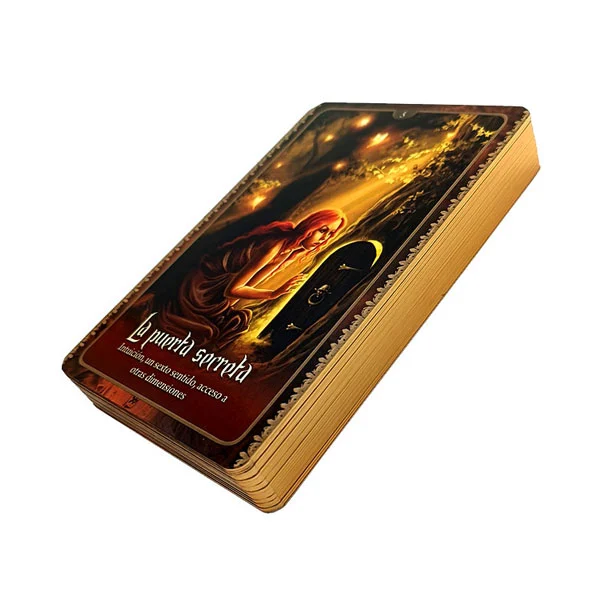
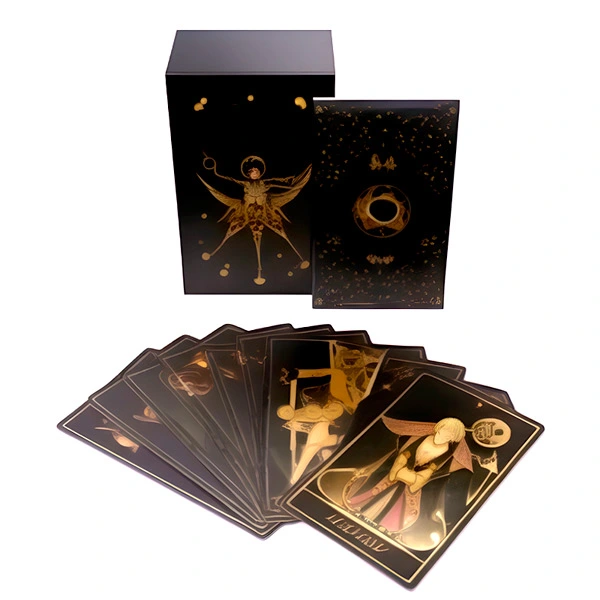
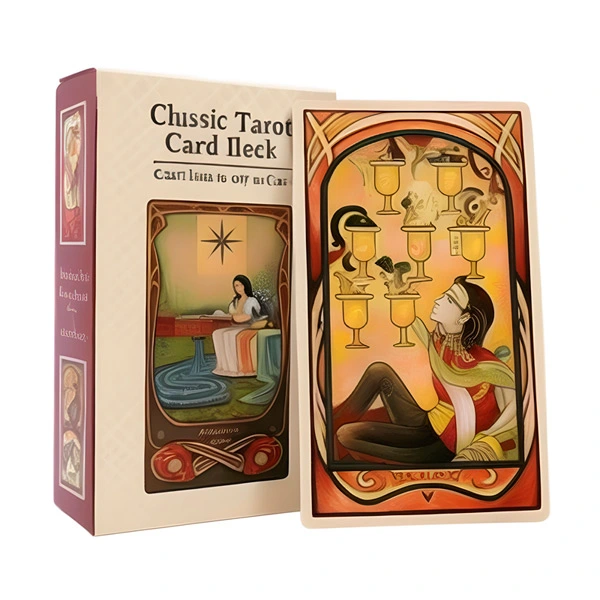
For tarot creators or brands preparing their own artwork for production, Guangdong Chenlong ACG Technology Co., Ltd. provides custom card printing across Tarot Card product lines including Oracle Tarot, Golden Tarot, Rainbow Foil Tarot and Classic Tarot Cards. Once your artwork, card structure and quantity are defined, you can review the custom tarot card printing options or contact info@chenlong-acg.com for a project-specific discussion.