Choosing the right cardstock is one of the most important material decisions in a custom card project. Two decks can use similar artwork and identical dimensions yet feel very different in the hand because their paper weight, thickness, internal core, surface finish, coating, and final construction are different.
For publishers, board game designers, crowdfunding creators, and brand buyers, playing card cardstock should therefore be selected by use case rather than by a single number. A higher GSM does not automatically mean a better card, and two papers with similar GSM values do not necessarily have exactly the same thickness, stiffness, opacity, or handling characteristics.
A useful sourcing brief considers several variables together: GSM, caliper, core type, surface texture, printing requirements, expected handling, card count, packaging, and production quantity. This guide explains how those variables relate to one another and how to prepare a clearer request for samples or quotation.
1. Why Game Cardstock Is Not Ordinary Paper
Game cards are handled differently from most printed paper products. Players repeatedly pick them up, fan them, shuffle them, deal them, stack them, hold them in concealed hands, and return them to a box or insert. A tarot card may be handled differently from a poker-sized playing card, while a board game may contain cards that are drawn only occasionally.
That means the best cardstock for playing cards cannot be selected only by asking whether a sheet prints well. The finished card also needs to suit the way the game is actually played.
Handling and Shuffle Feel
Card thickness, stiffness, surface finish, coating, and edge quality can all influence the way a deck feels during handling. Exact shuffle performance and durability depend on the complete card construction and cannot be predicted from GSM alone.
For a game that requires frequent shuffling, publishers should test a physical sample deck rather than approve the paper from a specification sheet only. A card that appears suitable when viewed individually may feel too stiff, too flexible, too smooth, or otherwise different once a complete deck is handled together.
Opacity and Hidden Information
Many card games depend on information remaining concealed until the card is revealed. This makes show-through an important consideration for cards with printed fronts and backs.
Playing-card stocks may include an internal coloured core, such as blue, black, or grey, intended to reduce the visibility of artwork through the card. The exact opacity performance of each stock depends on its construction, thickness, pigments, coatings, printing, and manufacturer. Opacity percentages are stock-specific, so request technical sheets or samples.
For projects in which hidden information is critical, do not rely only on a stock name such as “black core.” Request a representative printed sample and check the finished card under realistic lighting conditions.
Durability Is a Complete-Construction Question
Durability is also affected by more than paper weight. Surface treatment, coating, lamination if used, card edges, printing, frequency of play, storage conditions, and handling can all matter. Exact lifespan comparisons between cardstock grades are not supported by the approved source set.
The safest purchasing approach is to define how the deck will be used and then compare samples of the actual proposed constructions.
Publishers developing a conventional custom deck can review Chenlong's custom playing card category when discussing cardstock, printing, quantity, and sample requirements.
2. GSM Weight and Caliper Explained
GSM and thickness are related, but they are not interchangeable.
GSM means grams per square metre and describes the mass of the material per unit area. Caliper describes the physical thickness of the card material. Because paper composition and construction can vary, two cardstocks with the same GSM do not necessarily have exactly the same caliper, stiffness, or handling characteristics.
For this reason, specifying only “300 GSM cards,” for example, does not completely define a playing-card material.
Common Playing-Card Weight and Thickness Range
The approved industry sources. describe a typical playing-card range of approximately 280–330 GSM, with a thickness of roughly 0.27–0.33 mm, also described as approximately 10–13 PT. These values should be understood as a broad industry reference rather than a universal requirement for every card product.
| Specification | Industry Reference Range | What It Tells the Buyer |
|---|
| Paper Weight | Approx. 280–330 GSM | Mass per unit area; useful for comparing paper specifications but not enough to define stiffness or thickness by itself. |
| Caliper | Approx. 0.27–0.33 mm | Physical thickness of the card material. |
| Point Reference | Approx. 10–13 PT | Another thickness convention encountered in print and packaging specifications. |
These ranges come from the two industry references listed in the Sources section. The exact available stock, finished thickness, tolerance, coating, and deck construction should still be confirmed with the card manufacturer.
Why GSM Alone Can Be Misleading
Imagine two materials that are both described at a similar GSM. One may use a denser or more compressed paper structure, while another may have a different internal construction. The cards can therefore differ in thickness and physical feel even when the nominal paper weight appears similar. Exact relationships between density, stiffness, and caliper require stock-specific technical data.
This is why a professional RFQ should ideally identify:
Target GSM or preferred stock name;
Target thickness if it matters to the project;
Core requirement;
Surface finish;
Number of cards per deck;
Finished card size;
Intended use and expected handling;
Packaging constraints.
Deck Thickness Matters Too
The thickness of one card may seem small, but the effect accumulates across a complete deck. Changing cardstock can therefore change the total deck thickness and may affect tuck boxes, rigid boxes, inserts, card wells, and other packaging components.
The exact finished deck thickness should be calculated or sampled from the selected stock rather than estimated from an unrelated product. Manufacturing tolerance, coating, and other processing can also affect the final result.
3. Core Types: Blue, Black and Beyond
The internal core is an important part of many paper playing-card constructions because it helps limit transparency between the two printed sides. Buyers may encounter terms such as blue core, black core, and grey core when comparing card stocks.
These names describe different internal stock constructions, but they should not be interpreted as a universal quality ranking. A manufacturer's blue-core paper is not automatically identical to another supplier's blue-core paper, and the phrase “black core” alone does not provide a measurable opacity specification.
| Core Type | General Sourcing Role | What to Verify |
|---|
| Blue Core | Commonly encountered as a playing-card and game-card construction intended to help reduce show-through. | Stock GSM, caliper, opacity in the finished printed card, stiffness, coating, and sample handling. Exact performance requires confirmation. |
| Black Core | Often selected when strong opacity is an important project requirement. | Actual stock specification, measurable opacity if required, thickness, handling, finish compatibility, and price. Specific opacity superiority is supplier-dependent. |
| Grey Core | Another internal-core direction that may be available for selected card constructions. | Opacity, intended use, stock availability, GSM, thickness, coating, and suitability for the project's hidden-information requirements. |
| Other / Supplier-Specific Core | Some card materials may use constructions described by different commercial names. | Do not select from the marketing name alone; request the technical specification and a physical sample. |
Blue Core vs. Black Core
For publishers, the practical difference is not simply colour. Both are discussed in the market as opacity-oriented card constructions, while black-core stocks are often positioned where stronger concealment of front-to-back artwork is desired. Exact comparative opacity, stiffness, durability, and price depend on the individual papers and have not been quantified in the approved source material.
If a game contains secret roles, hidden hands, unrevealed objectives, collectible information, or card backs that must not reveal the face beneath normal play conditions, opacity should be part of sample approval.
Do Not Use “Anti-Cheat” as an Unmeasured Claim
A dark core can help reduce visible show-through, but terms such as “anti-cheat” should be used carefully. A card's ability to conceal information depends on the complete construction and viewing conditions. No specific anti-cheating standard or opacity threshold has been supplied.
For production, a better requirement would be: “Front artwork must not be visibly identifiable through the back under the agreed inspection condition,” followed by a defined sample or measurable acceptance method where necessary.
4. Surface Finishes: Linen, Smooth and More
After weight and core, surface finish has one of the most noticeable effects on how the deck looks and feels. Common terms buyers may encounter include linen finish, smooth finish, and air-glazed or similarly marketed finishes.
Finish terminology is not always standardized between manufacturers, so the same name should not be assumed to produce the same tactile result from every supplier.
Linen Finish
A linen finish refers to a textured surface direction commonly associated with a visible or tactile pattern on the card face. The texture can change the visual and handling character of the finished deck.
For buyers, the useful questions are:
How pronounced is the texture?
Is it created in the paper, coating, embossing, or another production step?
How does it affect fine artwork?
How does the finished deck feel when shuffled?
Is the texture identical on both sides?
Exact differences in friction, shuffle performance, durability, and print reproduction require stock-specific verification.
Smooth Finish
A smooth finish provides a flatter visual and tactile surface than a strongly textured linen-style card. Designers may prefer it when the artwork contains detailed illustration, typography, or visual elements they want to reproduce without an obvious surface texture interfering with the appearance.
However, “smooth” does not identify a complete production specification. Coating, paper, gloss level, friction, stiffness, and other properties may still differ between smooth stocks.
Air-Glazed and Other Finish Terms
“Air-glazed” is another term buyers may encounter when researching playing card stock, but exact definitions and manufacturing methods can vary by supplier.
If a quotation uses a finish name you have not previously approved, ask for a physical sample. The sample should represent the actual paper, core, coating, and surface finish proposed for production rather than simply a card with a similar marketing name.
Test Finish With the Final Artwork
A white stock sample can help you compare texture, but a printed sample is more useful when artwork quality matters. Dark backgrounds, fine lines, gradients, small text, metallic-looking illustrations, and other visual elements may interact differently with the chosen surface.
Publishers producing game-specific decks can also review Chenlong's board game cards category when the project requires cards as part of a broader tabletop component set.
5. Paper vs. Plastic Cards
Paper cardstock is not the only option for a custom deck. Plastic substrates such as PVC and PET are also encountered in card manufacturing. Chenlong lists PVC Playing Card as part of its product range.
Paper and plastic should not be compared by asking which is universally “better.” They are different material systems and can suit different projects.
| Decision Area | Paper Cardstock | Plastic Cards |
|---|
| Material Structure | Paper-based card construction, potentially with blue, black, grey, or another core. | Plastic substrate such as PVC or another specified plastic construction. PET availability depends on supplier. |
| Traditional Playing-Card Feel | Can provide the familiar handling associated with paper playing and game cards, depending on stock and finish. | Produces a different tactile and flex profile from paper; exact feel depends on material and thickness. |
| Water / Moisture Exposure | Performance depends on paper, coating, and construction. | Plastic cards may be considered where resistance to moisture is a project priority, but exact resistance claims require material-specific verification. |
| Durability | Depends on cardstock, coating, handling, edges, storage, and frequency of use. | Often selected for projects seeking a different durability profile, but comparative lifecycle claims require testing. |
| Printing and Finishing | Wide range of paper-oriented printing and finishing approaches may be considered. | Printing and finishing must be compatible with the selected plastic substrate. |
| Cost | Project-specific. | Project-specific; no verified universal price relationship is provided. |
When to Consider PVC Playing Cards
PVC may be worth evaluating when the project specifically calls for a plastic card rather than conventional paper cardstock. The correct choice should be based on intended handling, environmental exposure, printing requirements, flexibility, deck thickness, packaging, and budget.
Do not automatically convert a paper specification into PVC while keeping every other part of the project unchanged. The material shift may affect thickness, feel, printing, finishing, packaging, and quotation. Exact relationships require supplier confirmation.
Chenlong's PVC playing card product page can be used when comparing a plastic-card direction with conventional paper playing-card stock.
6. Choosing Cardstock by Use Case
The most efficient way to select cardstock is to start with the game or product rather than with the paper catalogue.
| Use Case | Material Priorities | Questions to Ask |
|---|
| Board Game Cards | Readable artwork, appropriate opacity, fit with the complete component set, suitable handling for the expected play pattern. | How often will the cards be shuffled? Are they hidden information? How many cards are in the deck? Must they fit an insert? |
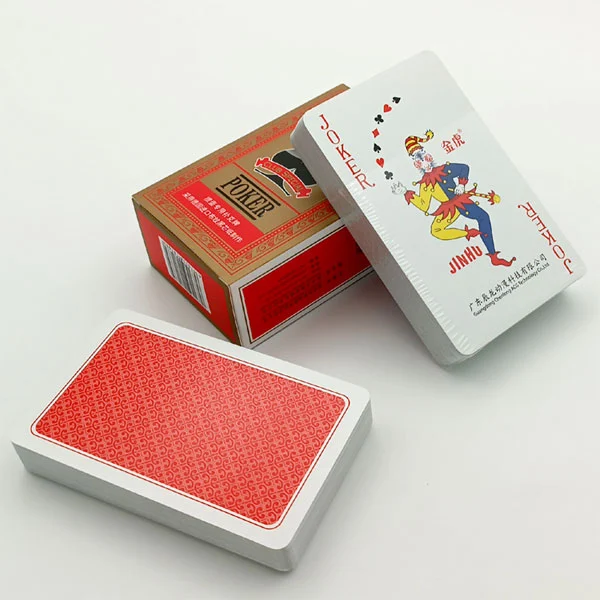
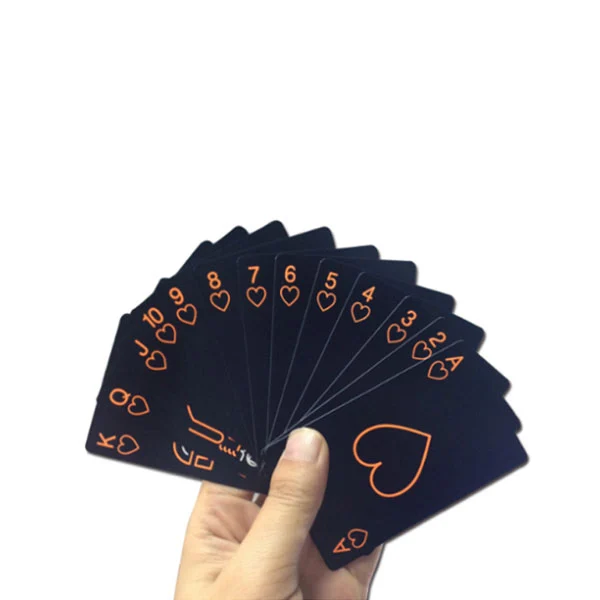
| Traditional / Custom Playing Cards | Consistent deck feel, opacity, shuffle handling, card-back concealment, appropriate surface finish. | Which stock and core are proposed? Linen or smooth? What sample best represents the intended production deck? |
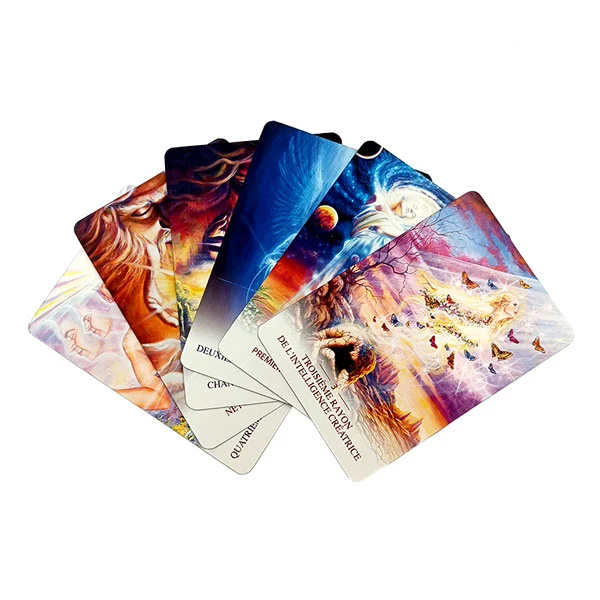
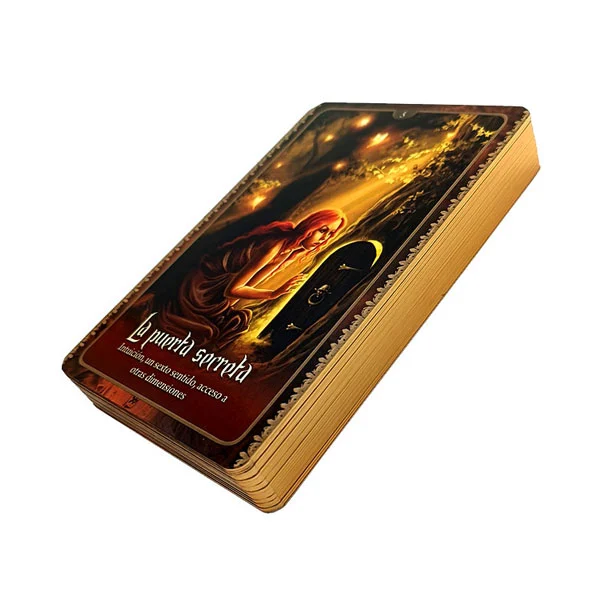
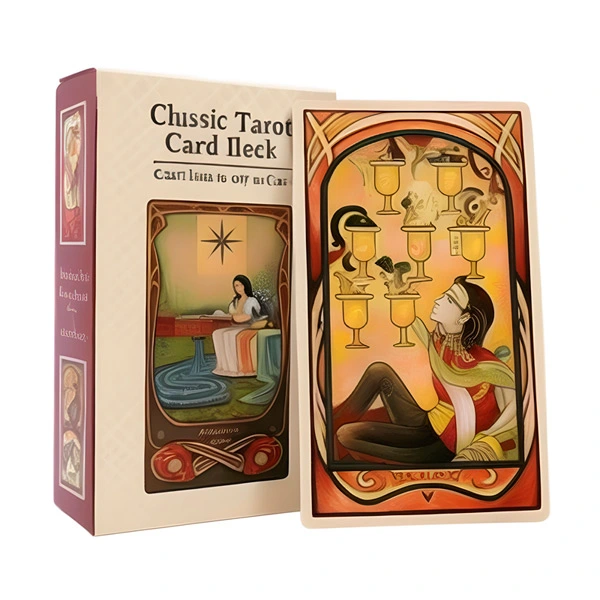
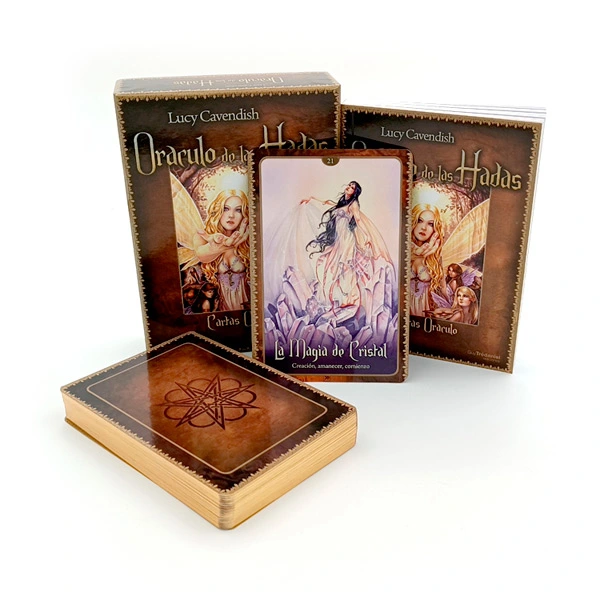
| Tarot Cards | Artwork presentation, tactile feel, card dimensions, deck thickness, surface finish, compatibility with decorative processes. | Will the deck use foil, gilding, special coating, or another finish? Does the cardstock support the selected process? |
| Promotional Cards | Brand presentation, budget, required lifetime, packaging, quantity. | Will recipients handle the cards frequently, or is the deck primarily a campaign or gift item? |
| High-Frequency / Casino-Style Project | Defined handling, opacity, dimensional consistency, finish, inspection requirements. | What does “casino-grade” mean in measurable terms for this project? There is no universal casino-grade paper standard, so define measurable criteria per project. |
| Plastic Card Project | Plastic substrate selection, thickness, flexibility, printing compatibility, intended exposure and handling. | Is PVC required? What finished thickness and surface are proposed? Does the sample represent mass production? |
Board Game Cards
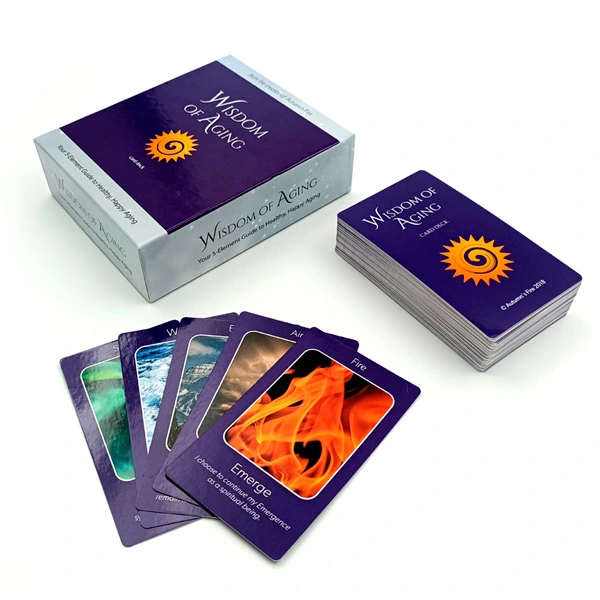
For board games, first determine how cards function during play. A deck that is shuffled every round may require different handling priorities from reference cards that remain on the table. Secret-role cards may make opacity especially important, while large illustrated cards may place more emphasis on artwork and surface appearance.
Packaging matters as well. If the card count or cardstock thickness changes after the insert is approved, the deck may no longer fit its intended compartment.
Tarot and Illustration-Focused Decks
Tarot cards often place greater visual emphasis on individual card artwork. Publishers may therefore spend more time comparing smooth versus textured surfaces and evaluating compatibility with foil, gilding, or other decorative processes.
Exact cardstock compatibility with special finishing must be confirmed for the intended production route.
Promotional and Branded Decks
A promotional product should be specified according to how recipients will use it. If the deck is intended primarily as a brand gift, the buyer may prioritize artwork, packaging, and budget differently from a deck designed for years of frequent gameplay.
The most expensive card construction is not automatically the most suitable one. A better specification is the one that matches the actual product objective.
Projects Described as “Casino-Grade”
Buyers sometimes use phrases such as “casino quality,” “professional grade,” or “casino-grade cardstock.” These labels are not enough to manufacture or inspect a card.
If a project genuinely requires a high-performance card specification, define the required stock, core, thickness, finish, dimensional tolerance, opacity, handling, inspection method, and any other measurable criteria. No universal casino-grade paper specification exists; define measurable criteria per project.
7. FAQ
What GSM is best for playing cards?
There is no single best GSM for every deck. The industry references approved. describe approximately 280–330 GSM as a common playing-card range, alongside thicknesses of roughly 0.27–0.33 mm or 10–13 PT. The final choice should also consider core, finish, stiffness, card size, deck count, handling, and packaging.
Is 300 GSM good for playing cards?
300 GSM falls within the broad 280–330 GSM industry reference range used in this guide, so it can be a reasonable starting specification. However, “300 GSM” alone does not tell you the exact thickness, core, opacity, stiffness, coating, or shuffle feel. Compare actual samples before approving production.
What is the difference between blue-core and black-core playing cards?
Both are internal playing-card stock constructions used to help reduce show-through. Black-core stocks are often considered when stronger opacity is a priority, while blue-core materials are also commonly encountered in playing and game cards. Exact comparative opacity, stiffness, price, and performance depend on the individual stock and supplier. If concealment matters, approve the actual printed sample rather than relying on the colour name alone.
Are plastic playing cards better than cardstock?
Not universally. Paper cards and plastic cards provide different material and handling characteristics. PVC cards may be considered when a project specifically requires plastic construction, while paper cardstock may be preferred for another game's feel, print structure, or budget. Comparative durability, moisture resistance, and cost depend on the actual materials and require project-specific verification.
Choose the Card Construction, Not Just the GSM
The main lesson when sourcing card stock for cards is that GSM is only one part of the specification. A professional playing-card material decision should consider weight, caliper, core, opacity, surface texture, coating, printing, handling, card count, packaging, and intended use together.
Guangdong Chenlong ACG Technology Co., Ltd. states that it operates a 30,000㎡ factory with more than 200 employees, uses Heidelberg printing equipment, reports annual output value above RMB 300 million, and provides an R&D laboratory and Digitalised Production for Small Orders. Its product range includes Playing Cards, Board Game Cards, PVC Playing Cards, tarot products, and other tabletop components.
If you are comparing cardstock for a new playing-card, board-game, tarot, promotional, or branded deck, send your preferred GSM or material direction, card size, card count, surface finish, core preference, and expected order quantity to info@chenlong-acg.com. You can also visit Chenlong's Playing Card product page to discuss available samples before finalizing the card specification.