Looking for a card game for family night, a classroom activity, a holiday gathering, or simply a quiet evening at home? The number of choices can be surprisingly large. Some games need nothing more than a standard 52-card deck, while others use Jokers, multiple decks, shortened packs, special cards, or additional components.
This family card games reference brings more than 50 games together in one place. Instead of ranking them from “best” to “worst,” we have organized the games by style and added a quick-reference table showing player count, typical playing time, difficulty, and the deck required.
Player counts and pack requirements are based primarily on the Bicycle Cards rules library. Where a specification could not be confirmed from the approved source set, it is marked . Playing times and difficulty ratings are editorial estimates intended to help families compare games quickly; actual sessions can be shorter or longer depending on experience, house rules, and the number of rounds played.
1. How to Use This List
The table is designed as a practical lookup tool rather than a detailed rules manual. Choose the number of players first, then compare playing time and difficulty. Finally, check the “Cards Needed” column before choosing a game.
Players: The supported or typical player count based on the Bicycle rules source where available.
Typical Time: An editorial estimate for a normal casual session, not an official rule specification.
Difficulty: An editorial comparison using Easy, Easy–Medium, Medium, or Advanced.
Cards Needed: The pack required by the referenced rules. Some games use a full 52-card deck, while others remove cards, add Jokers, or use multiple decks.
Category: A practical grouping created for this guide. A game may reasonably fit more than one category.
For families with younger children, start with the Easy entries. For adults or older children who already understand suits, tricks, melds, and scoring, the Classic and Partnership sections offer considerably more strategic depth.
2. The Master Table: 50+ Family Card Games
The following card games list includes traditional standard-deck games, children's games, fast social games, rummy variants, trick-taking games, and partnership games. “Typical Time” and “Difficulty” are editorial estimates rather than official Bicycle specifications.
| # | Game | Category | Players | Typical Time* | Difficulty* | Cards Needed |
|---|
| 1 | Rummy | Classic | 2-5+ | 20-40 min | Easy-Medium | Standard 52-card deck |
| 2 | Gin Rummy | Classic | 2 | 20-40 min | Medium | Standard 52-card deck |
| 3 | 500 Rum | Classic | 2-5+ | 30-60 min | Medium | Standard 52-card deck |
| 4 | Knock Rummy | Classic | 2-5+ | 20-40 min | Medium | Standard deck |
| 5 | Boat House Rum | Classic | 2-5+ | 20-40 min | Medium | Standard deck |
| 6 | Continental Rummy | Classic | 4-5+ | 45-90 min | Medium | Two 52-card decks + 2 Jokers |
| 7 | Conquian | Classic | 2 | 20-40 min | Medium | 40 cards from a standard deck |
| 8 | Hearts | Classic | 3-5+ | 30-60 min | Medium | Standard 52-card deck |
| 9 | Thirty-One | Classic | 2-5+ | 15-30 min | Easy-Medium | 2-5+ |
| 10 | Six Card Golf | Classic | 2-4 | 20-40 min | Easy-Medium | 2-4 |
| 11 | Tunk | Classic | 2-5+ | 20-40 min | Medium | 2-5+ |
| 12 | Forty-Five | Classic | 2, 4, 5+ | 20-40 min | Medium | 2, 4, 5+ |
| 13 | Sixty-Six | Classic | 2 | 20-30 min | Medium | 24-card pack: A, K, Q, J, 10 and 9 of each suit |
| 14 | Four-Hand Sixty-Six | Classic | 4 | 30-45 min | Medium | 32-card pack: A, 10, K, Q, J, 9, 8 and 7 of each suit |
| 15 | Go Boom | Classic | 2-5+ | 15-30 min | Easy | Standard 52-card deck |
| 16 | Page One | Classic | 2-4 | 15-30 min | Easy-Medium | 52-card deck + 1 Joker |
| 17 | Spar | Classic | 2-4 | 15-25 min | Medium | 35 cards from a standard deck |
| 18 | Spoil Five | Classic | 2-5+ | 25-45 min | Medium | Standard 52-card deck |
| 19 | Napoleon | Classic | 2-5+ | 20-40 min | Medium | Standard 52-card deck |
| 20 | Palace | Classic | 2-5+ | 20-40 min | Easy-Medium | 1 deck for 2 players; 2 decks for 3-5 players |
| 21 | Kings Corner | Classic | 2-4 | 20-30 min | Easy-Medium | 2-4 |
| 22 | Cribbage | Classic | 2-3 | 30-60 min | Medium | Standard deck; scoring equipment may also be used |
| 23 | Pitch | Classic | 2-4 | 30-45 min | Medium | 2-4 |
| 24 | Booray | Classic | 4-5+ | 20-40 min | Medium | 4-5+ |
| 25 | Go Fish | Kids & Beginners | 2-5+ | 10-20 min | Easy | Standard 52-card deck |
| 26 | Crazy Eights | Kids & Beginners | 2-5+ | 10-20 min | Easy | Standard 52-card deck |
| 27 | Old Maid | Kids & Beginners | 2-5+ | 10-20 min | Easy | 51 cards: standard deck with one Queen removed |
| 28 | War | Kids & Beginners | 2 | 10-30 min | Easy | Standard 52-card deck |
| 29 | Slapjack | Kids & Beginners | 2-5+ | 10-20 min | Easy | Standard 52-card deck |
| 30 | Snap | Kids & Beginners | 2-5+ | 10-20 min | Easy | Standard 52-card deck |
| 31 | Concentration | Kids & Beginners | 2-5+ | 15-30 min | Easy | Standard 52-card deck |
| 32 | Authors | Kids & Beginners | 2-5+ | 15-30 min | Easy | Standard deck |
| 33 | Trash | Kids & Beginners | 2-5+ | 15-30 min | Easy | 2-5+ |
| 34 | Pig | Kids & Beginners | 5+ | 10-20 min | Easy | Standard 52-card deck |
| 35 | Quadruple War | Kids & Beginners | 2 | 15-30 min | Easy | 2 |
| 36 | UNO | Kids & Beginners | 2-10 (Mattel official) | 15-30 min | Easy | Dedicated UNO deck |
| 37 | Spoons | Party & Fast-Paced | 3-5+ | 10-20 min | Easy | Playing cards + spoons |
| 38 | Egyptian Rat Screw | Party & Fast-Paced | 2-5+ | 15-30 min | Easy-Medium | Standard deck |
| 39 | Spit | Party & Fast-Paced | 2 | 10-20 min | Medium | Standard deck |
| 40 | Nerts | Party & Fast-Paced | 2-4 | 20-40 min | Medium | Multiple distinguishable decks |
| 41 | Presidents | Party & Fast-Paced | 3-5+ | 20-40 min | Easy-Medium | Standard deck |
| 42 | 99 (Ninety-Nine) | Party & Fast-Paced | 3-4 | 15-30 min | Easy-Medium | 3-4 |
| 43 | I Doubt It | Party & Fast-Paced | 2-5+ | 20-40 min | Easy | Standard 52-card deck |
| 44 | Bingo with Playing Cards | Party & Fast-Paced | 2-5+ | 15-30 min | Easy | Two standard 52-card decks |
| 45 | Linger Longer | Party & Fast-Paced | 4-5+ | 20-40 min | Medium | Standard 52-card deck |
| 46 | Hogwash! | Party & Fast-Paced | 2-8 | 15-30 min | Easy | Dedicated Bicycle Hogwash! deck |
| 47 | Spades | Partnership | Typically 4 | 30-60 min | Medium | Standard 52-card deck |
| 48 | Spades with Jokers | Partnership | 2-5+ | 30-60 min | Medium | Standard deck + Jokers |
| 49 | Euchre | Partnership | 2, 4 (4 best) | 20-40 min | Medium | Shortened deck |
| 50 | Whist | Partnership | 4 | 30-60 min | Medium | Standard 52-card deck |
| 51 | Bridge | Partnership | 4 | 45-90+ min | Advanced | Standard 52-card deck |
| 52 | Pinochle | Partnership | 2 | 45-90 min | Advanced | Pinochle pack |
| 53 | Canasta | Partnership | 4 | 45-90 min | Medium-Advanced | Multiple decks including Jokers |
| 54 | Hand and Foot | Partnership | 5+ | 60-120 min | Medium | Multiple decks |
| 55 | Kemps | Partnership | 2 or 4; larger groups possible with additional deck | 15-30 min | Easy-Medium | 52-card deck for 4; two decks may be used for a larger group |
| 56 | Pepper | Partnership | 2-4 | 25-45 min | Medium | 24 cards: 9, 10, J, Q, K and A of each suit |
*Typical playing time and difficulty are editorial estimates for comparison purposes. They are not official Bicycle ratings. Player counts and pack requirements follow the official Bicycle Cards rule sheets and the official Mattel UNO instructions.
3. Category Notes
Classic Card Games
The Classic section contains many of the games that reward repeated play. Rummy-family games focus on forming sets and sequences, while trick-taking games ask players to manage suits, timing, and the cards already played. These games are useful when a family wants something deeper than a ten-minute matching game but does not necessarily want a modern boxed tabletop game.
Some classic games are easy to learn but develop considerable strategy over time. Gin Rummy, Hearts, Sixty-Six, and Cribbage are good examples of games where understanding the rules is only the beginning. Others, such as Go Boom or Page One, are easier entry points for groups that want familiar playing cards without a long learning session.
Kids and Beginner Games
For young or first-time card players, matching, collecting, comparing, and shedding games are usually easier to approach than bidding or complex scoring. Go Fish asks players to collect matching ranks, Old Maid focuses on making pairs, Concentration turns the deck into a memory exercise, and Slapjack or Snap adds speed and visual recognition.
Bicycle lists Go Fish, Crazy Eights, Old Maid, Slapjack, and several related games in its family and children's rules material. That makes this group a useful place to start when teaching children how to hold cards, recognize ranks, wait for turns, and follow a simple game objective.
Party and Fast-Paced Games
Party card games usually work best when the interaction is as important as the cards. Spoons introduces a physical race element, I Doubt It adds bluffing, Presidents creates changing social positions, and games such as Egyptian Rat Screw and Spit reward fast reactions.
These choices can be useful when the group would rather laugh, react, and compete quickly than spend a long time planning each move. They are also easy to rotate during a larger family gathering because several games can fit into one evening.
Cooperative and Partnership-Style Games
Traditional playing-card libraries contain relatively few fully cooperative games in which every player works against the game itself. They contain many partnership games, however, where two players cooperate against another pair. For a family looking for teamwork, this is the more accurate category.
Spades, Whist, Bridge, Pinochle, Canasta, and Kemps all make communication with a partner part of the experience, although the rules governing communication differ from game to game. Kemps makes teamwork especially visible because partners use an agreed non-verbal signal, while Whist and Bridge build cooperation into trick-taking strategy.
For this reason, “partnership” should not be confused with “fully cooperative.” Your teammate is working with you, but another team is still trying to win.
4. How to Choose a Family Card Game
Choose by Age and Experience
For first-time players, begin with games that have one main action. Go Fish is based around asking for ranks. War largely revolves around comparing cards. Snap and Slapjack ask players to recognize a matching or target card quickly. Concentration is based on remembering where matching ranks appeared.
Once players are comfortable with ranks and suits, Crazy Eights, Palace, Go Boom, Rummy, and Six Card Golf introduce more decisions without immediately requiring partnership bidding or detailed scoring.
Experienced groups can move toward Hearts, Euchre, Canasta, Pinochle, Whist, or Bridge. The difficulty labels in this guide are comparative rather than formal age recommendations.
Choose by Number of Players
If there are only two players, Gin Rummy, Conquian, Sixty-Six, Go Fish, Crazy Eights, and several other entries can work. With four players, the choice becomes much wider because four also enables many partnership games.
For larger family gatherings, look toward games whose rules allow five or more players, such as Go Fish, Crazy Eights, Pig, Presidents, or I Doubt It. Some games require additional decks as the player count increases, so always check the Cards Needed column before starting.
Choose by Available Time
If you have roughly 15 minutes, begin with Go Fish, Old Maid, Crazy Eights, Slapjack, Snap, Pig, or another Easy game. For a longer family game night, Rummy, Hearts, Canasta, Whist, or a partnership game can support a more involved session.
Remember that the times in this table are typical editorial estimates. A single hand may be much shorter than a full scored game, and families often modify the number of rounds they play.
Choose by the Kind of Interaction You Want
Quiet and thoughtful: Gin Rummy, Rummy, Concentration, Sixty-Six
Fast and noisy: Snap, Slapjack, Spoons, Spit, Egyptian Rat Screw
Bluffing and social interaction: I Doubt It, Presidents, Hogwash!
Team play: Kemps, Spades, Whist, Bridge, Canasta
Simple games for children: Go Fish, Old Maid, War, Crazy Eights
More strategic play: Hearts, Pinochle, Bridge, Canasta, Gin Rummy
5. Games You Can Play with a Standard 52-Card Deck
One reason traditional card games remain useful for families is that a single standard deck can support many completely different games. You do not necessarily need a dedicated box for every game on this list.
Based on the Bicycle rules referenced for this guide, confirmed examples using a standard 52-card pack include:
Go Fish
Crazy Eights
Slapjack
Snap
Concentration
Rummy
Gin Rummy
500 Rum
Hearts
Go Boom
Napoleon
Whist
Bridge
I Doubt It
Linger Longer
Other games still begin with a conventional deck but modify it. Old Maid removes one Queen. Sixty-Six uses a 24-card subset. Four-Hand Sixty-Six uses a 32-card subset. Conquian removes the 8s, 9s, and 10s to produce a 40-card pack. Page One adds a Joker. These differences are worth checking before dealing.
Games such as Continental Rummy require more than one deck, while proprietary games such as UNO use their own dedicated card set rather than a conventional 52-card pack. UNO player counts (2-10, ages 7+) follow the official Mattel instruction sheet.
A standard deck is also flexible for creators. A designer testing an early card-game mechanic can often prototype ranks, suits, hands, and turn structures with ordinary cards before creating final artwork. Publishers or education brands that later need their own artwork can move from a prototype toward custom playing cards once the card structure is defined.
What Is in a Standard 52-Card Deck?
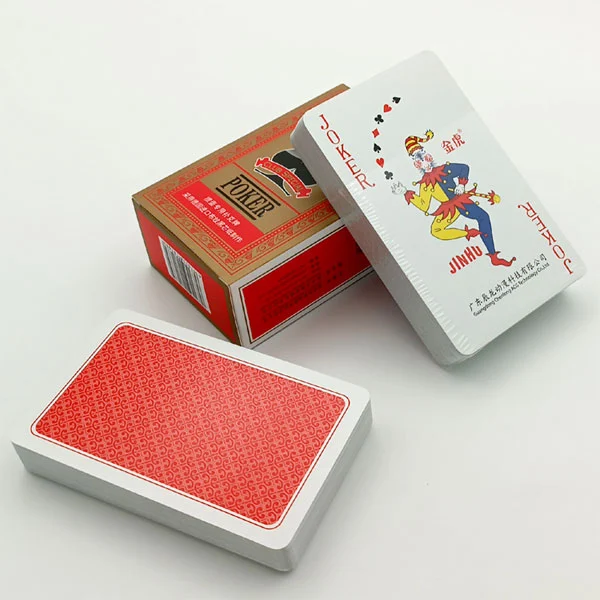
For the purposes of the games in this guide, a standard deck contains four suits and 52 playing cards. Whether Jokers are required depends on the individual game. A rule that specifies “52 cards plus a Joker,” for example, should not be treated as identical to a standard 52-card game.
This distinction becomes especially important when preparing cards for a classroom, event, or large family group. Check whether you need one complete pack, a stripped pack, several packs, or additional Jokers before everyone sits down to play.
6. FAQ
What are the easiest family card games to learn?
Go Fish, Crazy Eights, Old Maid, War, Slapjack, Snap, Pig, and Concentration are useful starting points because their central actions are relatively easy to explain. Bicycle identifies several of these games as suitable for family or children's play. The difficulty ratings in our table are editorial comparisons rather than official Bicycle ratings.
What card games can children start with?
Bicycle lists Go Fish, Crazy Eights, Old Maid, Slapjack, Snap, and Concentration among games accessible to young players, with several official rule pages showing starting ages of four and above. Age alone should not determine the choice, however. Reading ability, attention span, familiarity with numbers, and previous experience with games can all affect how easily a child learns a particular game.
Which family card games require only a normal deck of cards?
Confirmed examples in the Bicycle rules include Go Fish, Crazy Eights, Slapjack, Snap, Concentration, Gin Rummy, 500 Rum, Hearts, Go Boom, Napoleon, Whist, Bridge, and I Doubt It. Other games modify the standard pack by removing cards or adding Jokers, so check the individual rules before playing.
What family card games need no board, dice, or special equipment?
Many traditional games can be played with playing cards alone. Go Fish, Crazy Eights, Old Maid, Slapjack, Snap, Concentration, Rummy, Gin Rummy, Hearts, and Go Boom are examples where a conventional playing-card pack provides the core equipment. Some scoring games may be more convenient with paper, a scoring board, counters, or another aid, depending on the rules used.
A Card Deck Can Hold More Than One Game
The main advantage of a list of card games like this is not simply the number of titles. It shows how many different experiences can come from the same basic component. A standard deck can become a matching game for children, a fast reaction game, a rummy game, a strategic trick-taking game, or a partnership challenge simply by changing the rules.
For families, that makes playing cards a flexible game-night tool. For designers and educators, it also demonstrates how strongly rules and card structure shape the experience before artwork or packaging is added.
If you are developing an original family game, educational deck, promotional card set, or another card-based product, Guangdong Chenlong ACG Technology Co., Ltd. provides custom card printing services. Once your card count, size, artwork, and quantity are defined, you can review the playing card customization options or contact info@chenlong-acg.com for a project-specific discussion.